Role & Contribution
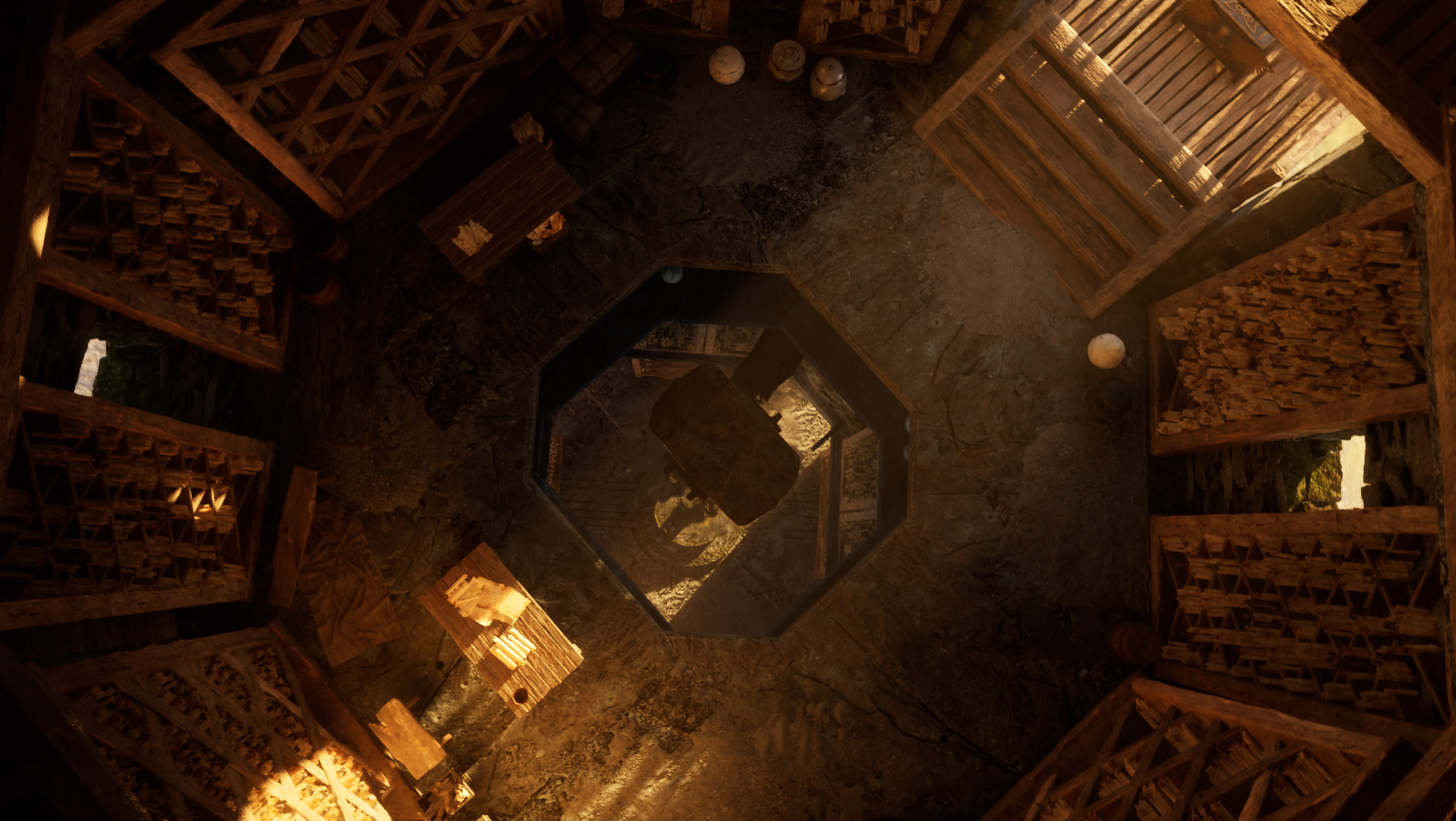
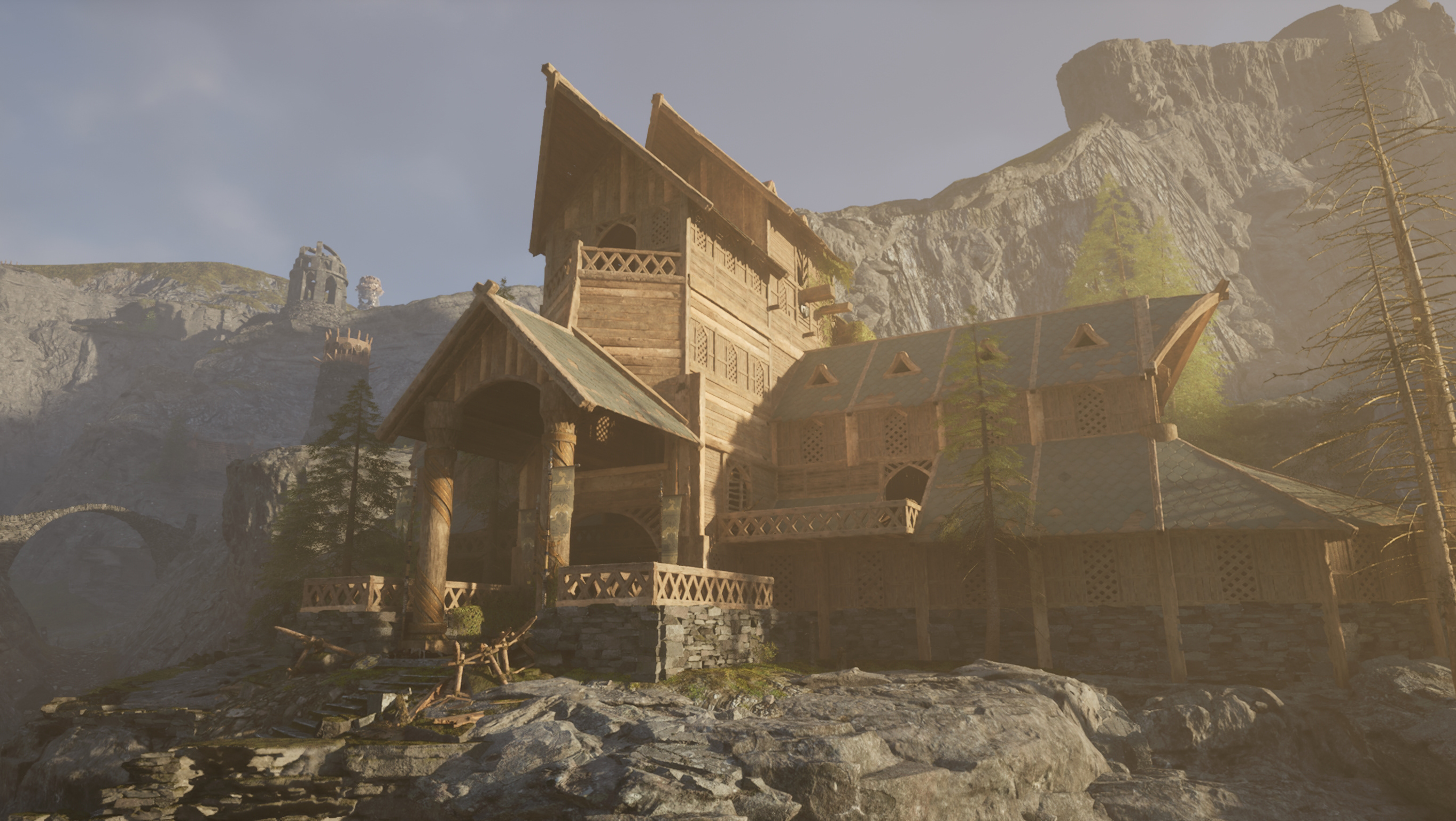
Environment Artist / Level Designer - One of the primary artists responsible for the conceptualization and construction of "Mosswood City," one of the largest and most intricate Points of Interest (POI) in the game.
Modular Asset Integrator - Managed the complex task of integrating a high volume of modular architectural assets and organic environment elements (moss, trees, lighting) to achieve a cohesive, overgrown look.
Visual Storyteller - Designed the scene composition and material blending to convey the history of the location, showing an ancient, ruined city reclaimed by nature.

Goal & Challenge 
The primary goal was to establish "Mosswood City" as a massive, visually complex ruin, setting the artistic and technical standard for large-scale environments within the game. The main challenge was managing the scale and complexity of the asset count while maintaining high visual fidelity and optimal performance for the final in-game experience.

Process & Creative Strategy 
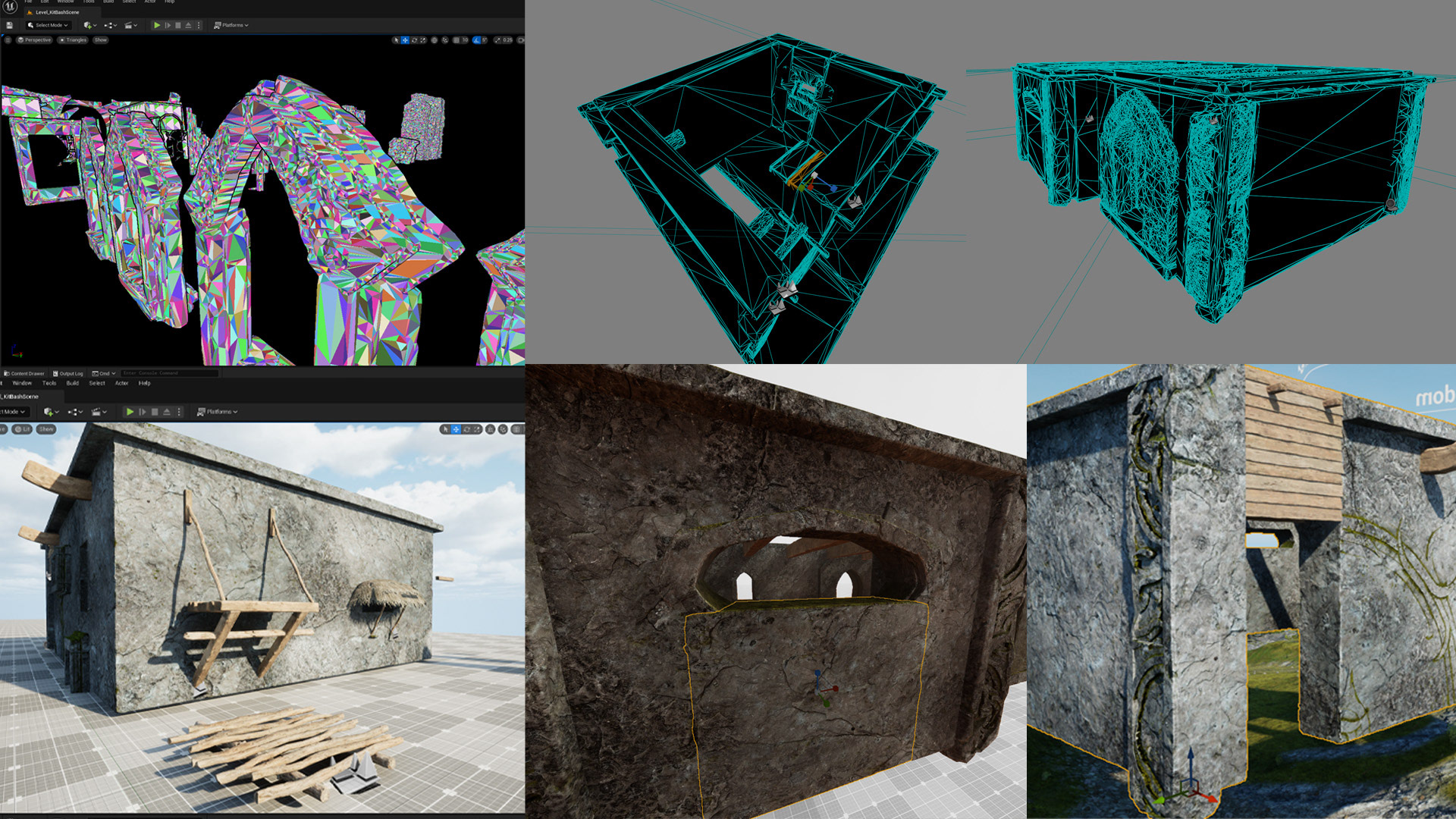
The creation of Mosswood City involved a careful balance between detailed asset work and efficient environment management. The layout was planned to create visually interesting exploration paths and key landmarks, ensuring the city felt complex yet navigable. The use of modular kits allowed for rapid iteration and believable architectural variation. The modular kits also allowed us to make quick iterations on architecture design without having to reconstruct the assets every time.

After working on building the city for a bit I quickly realized that it was going to need modular arrangements of assets.
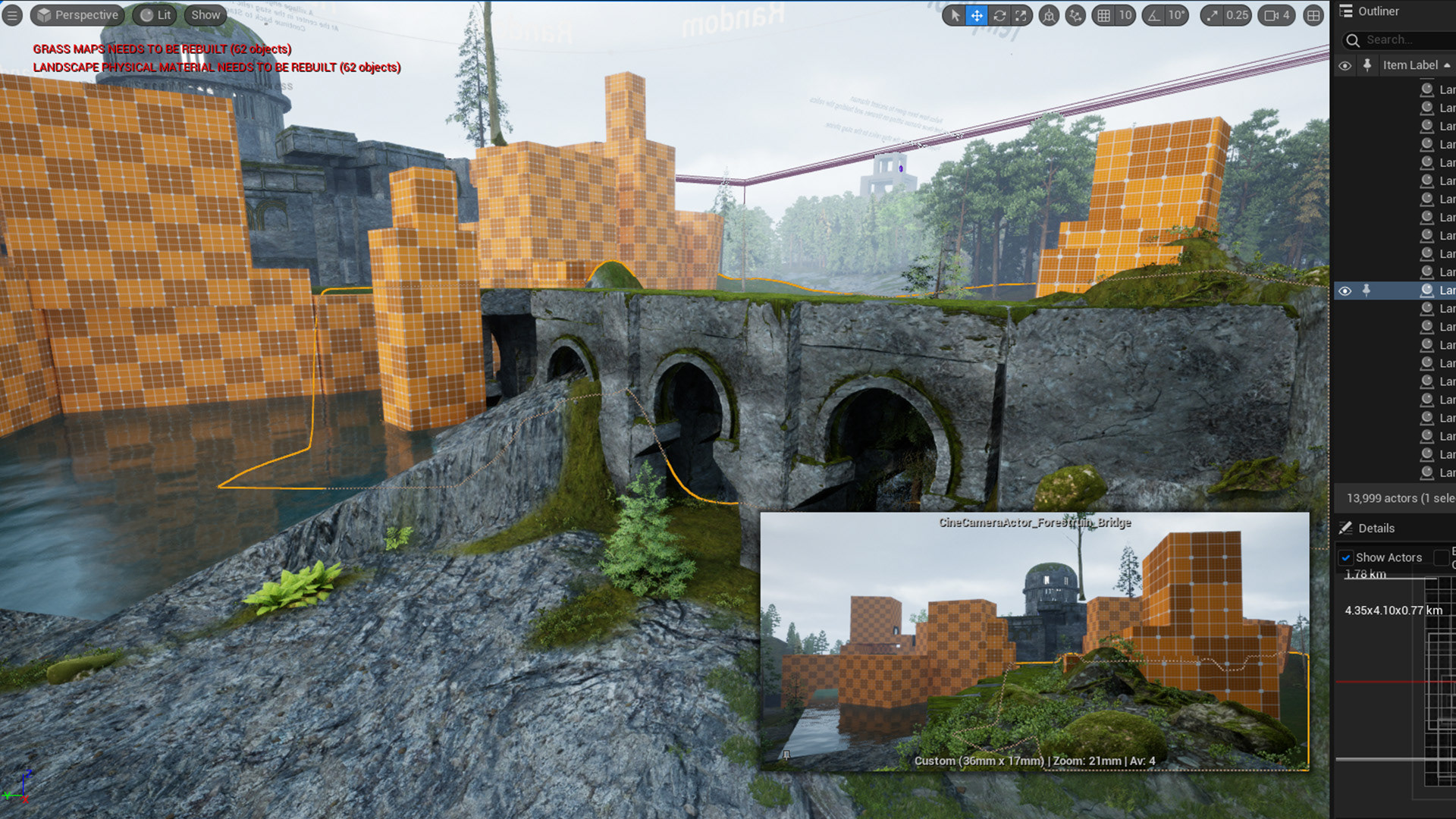
Bridge entering towards Mosswood city. There was a time where every major POI were just blocks. Mosswood city had the most number of blocks and the biggest blocks.
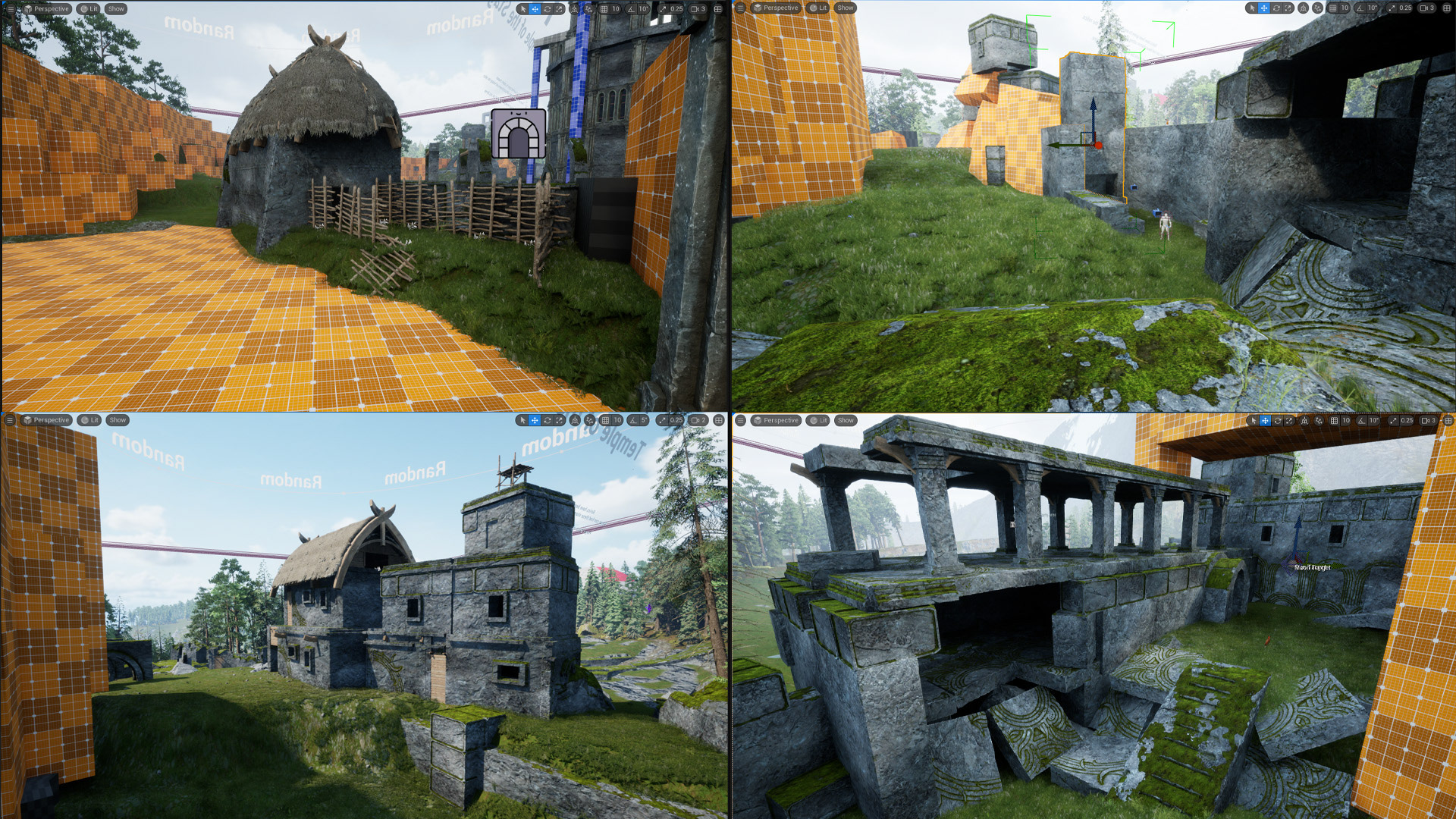
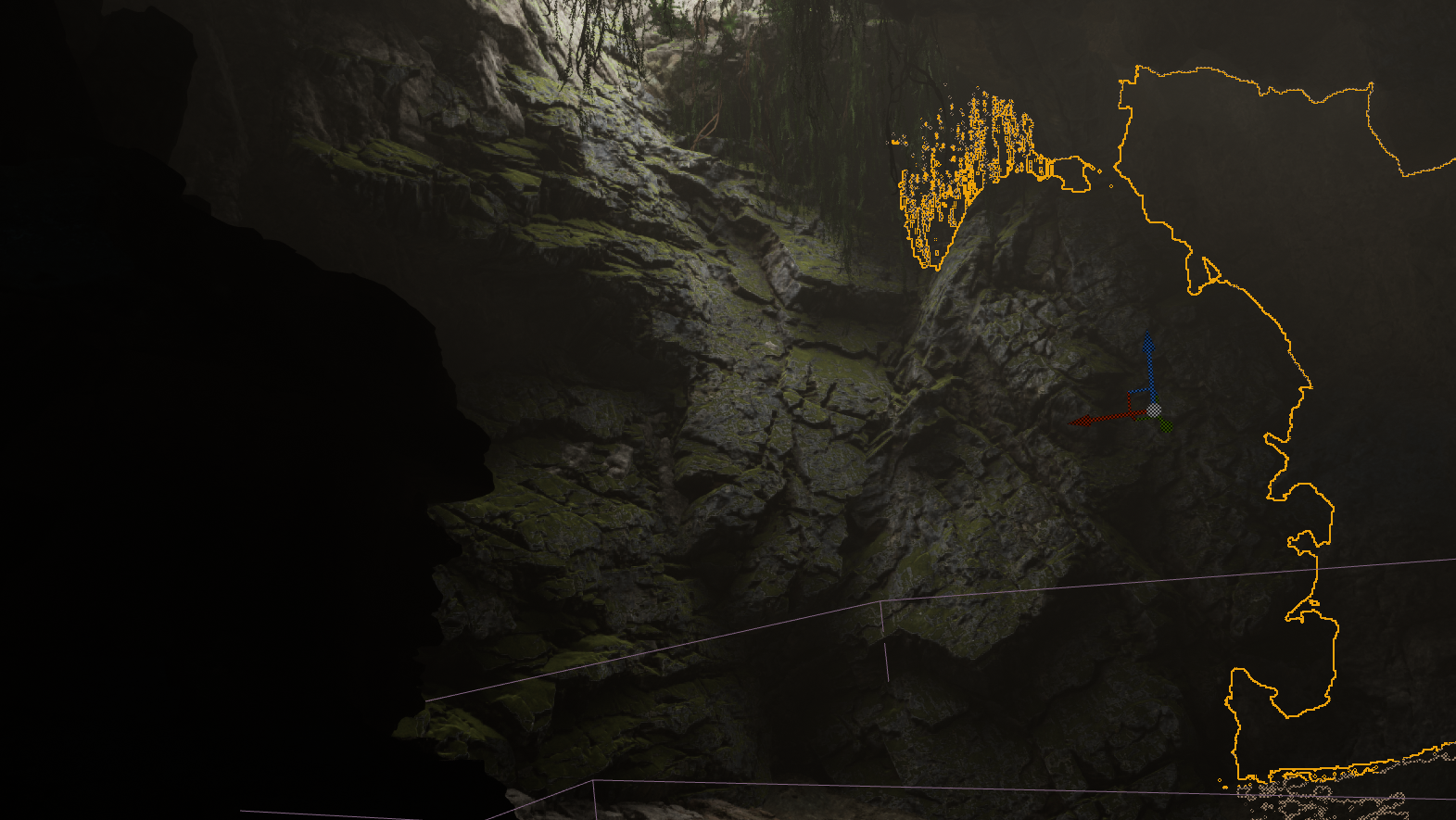
And block by block I started replacing the whiteboxing (Orangeboxing?) with actual meshes, terrain and building assets.
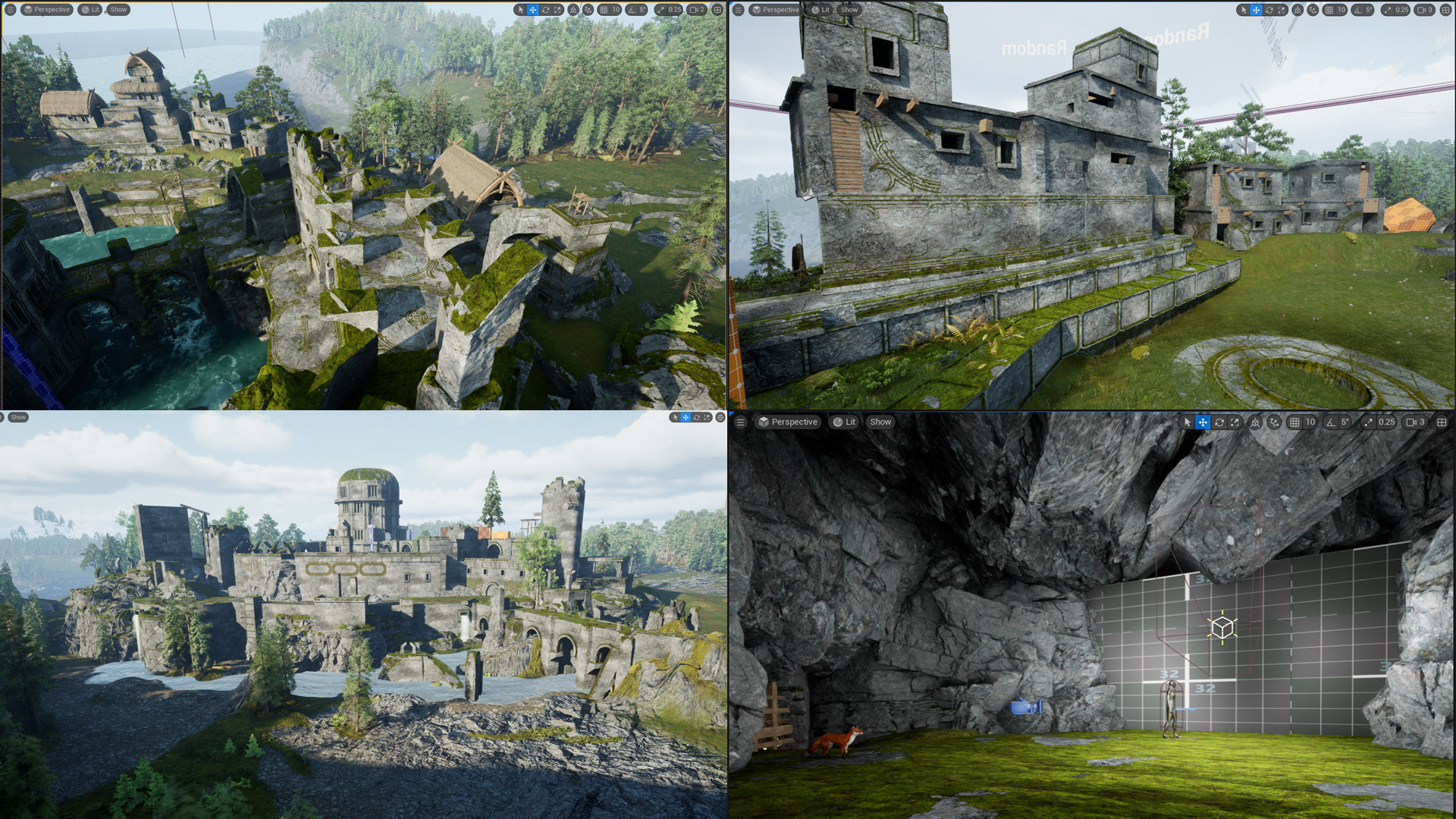
We were still iterating on how the core gameplay was going to go in this area as I was working on a draft meshing pass.
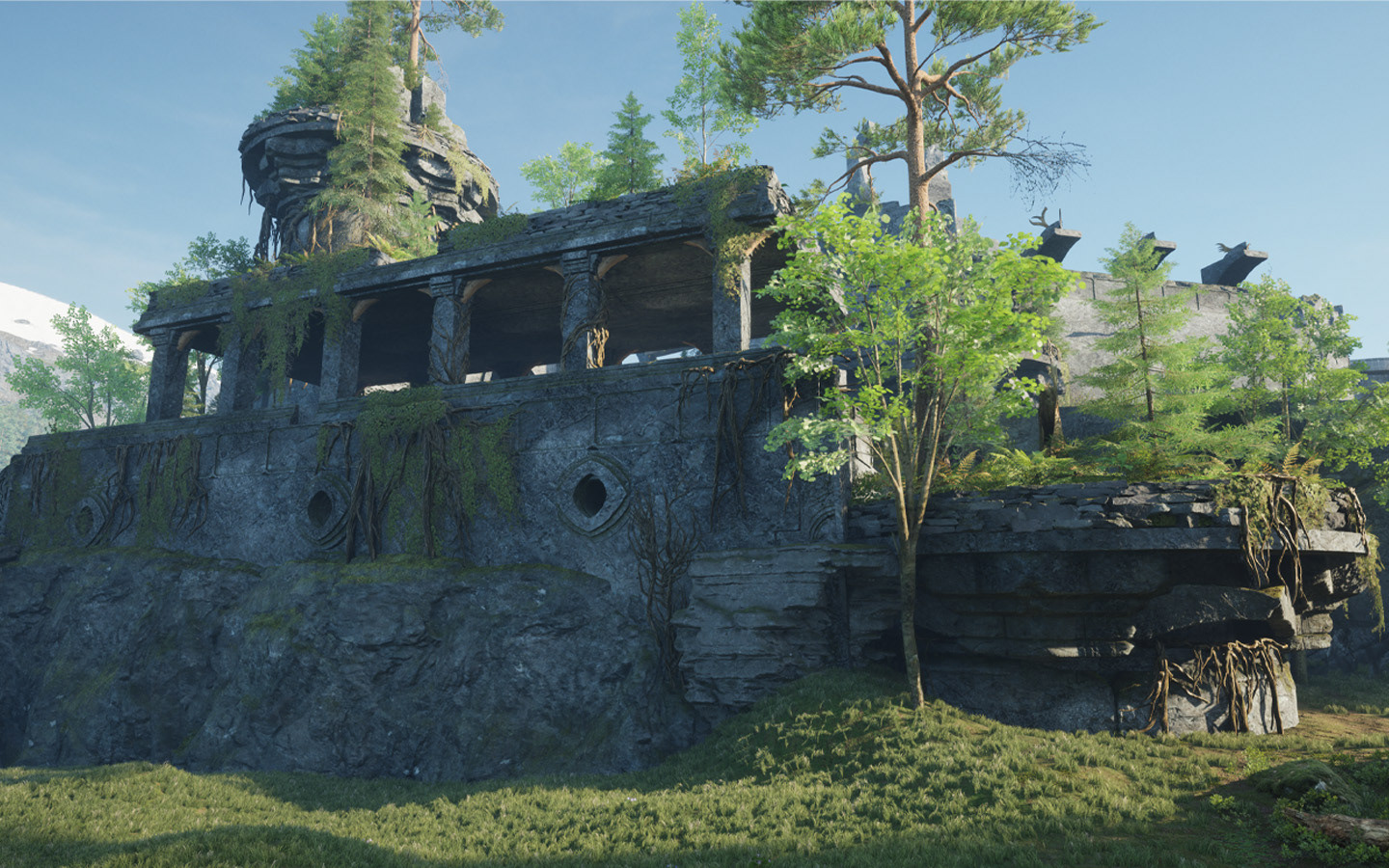
When things have settled a bit with the gameplay side of things, we started tweaking the modular arrangements to incoporate a better architectural design. Especially with shape languages that represented the tribe that lived here.
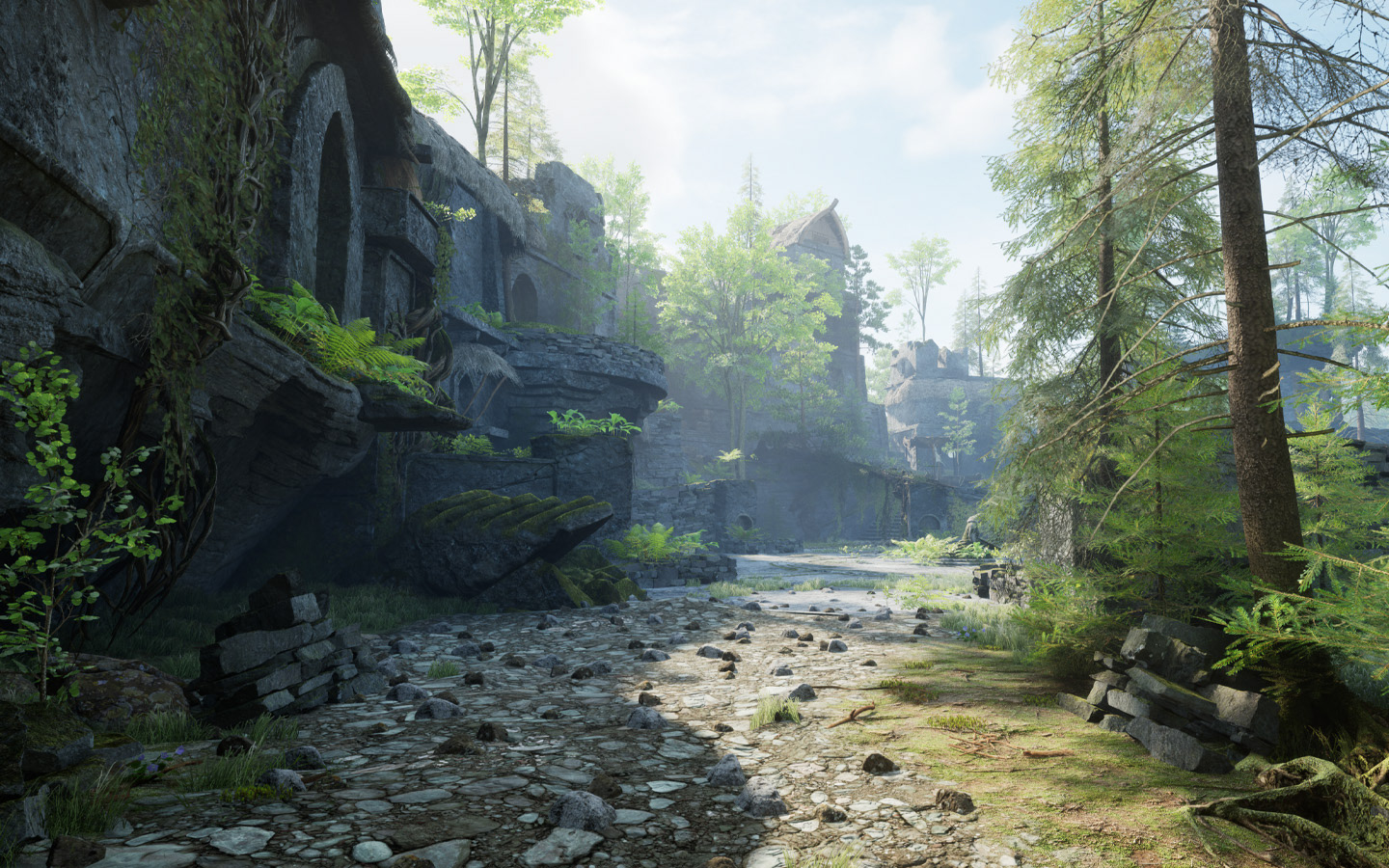
Set dressing with foliage, vines, ivy, destruction passes, landscape polish came after.
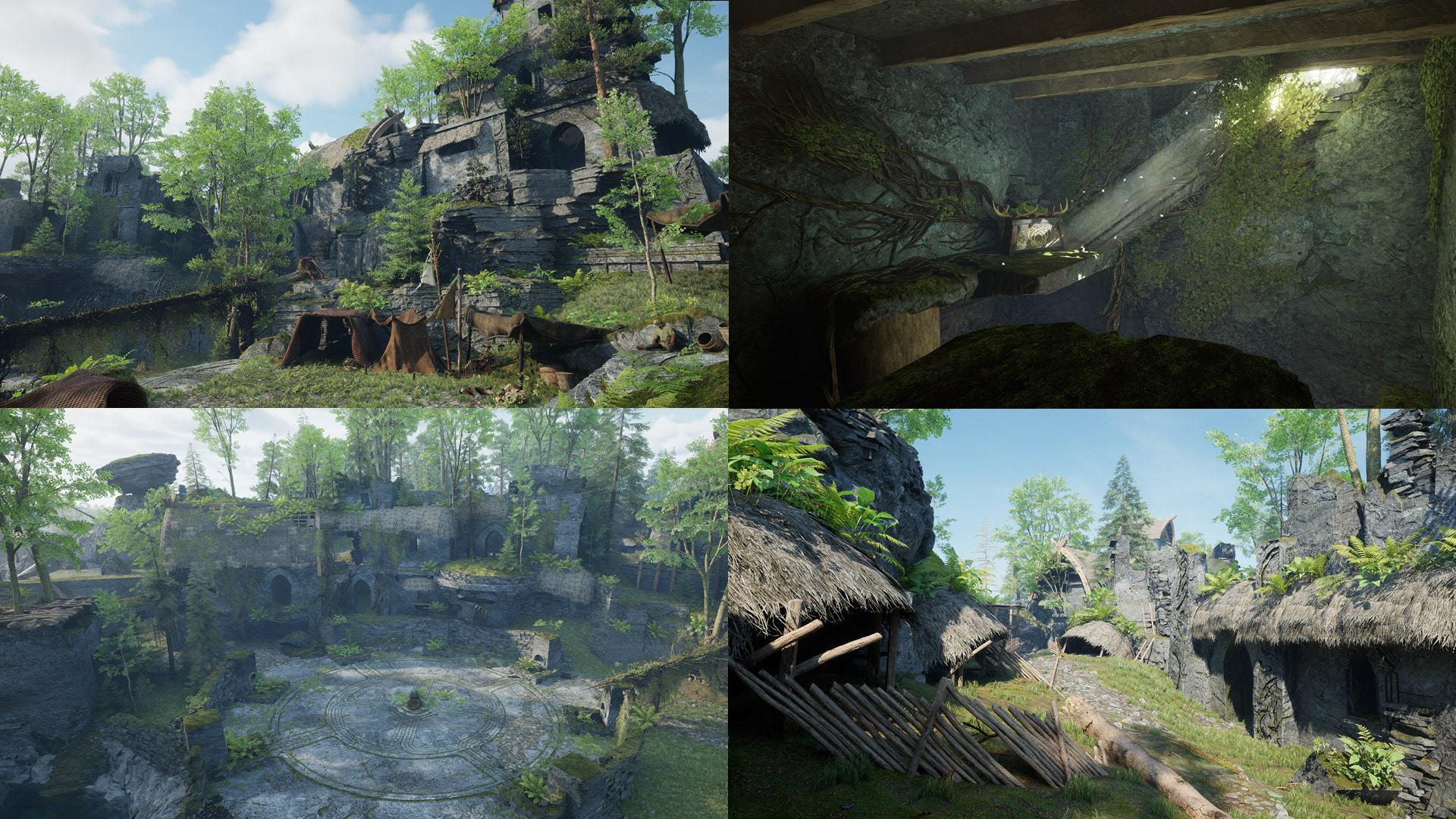
Set dressing is a major part of storytelling in Spirit of the North 2. 
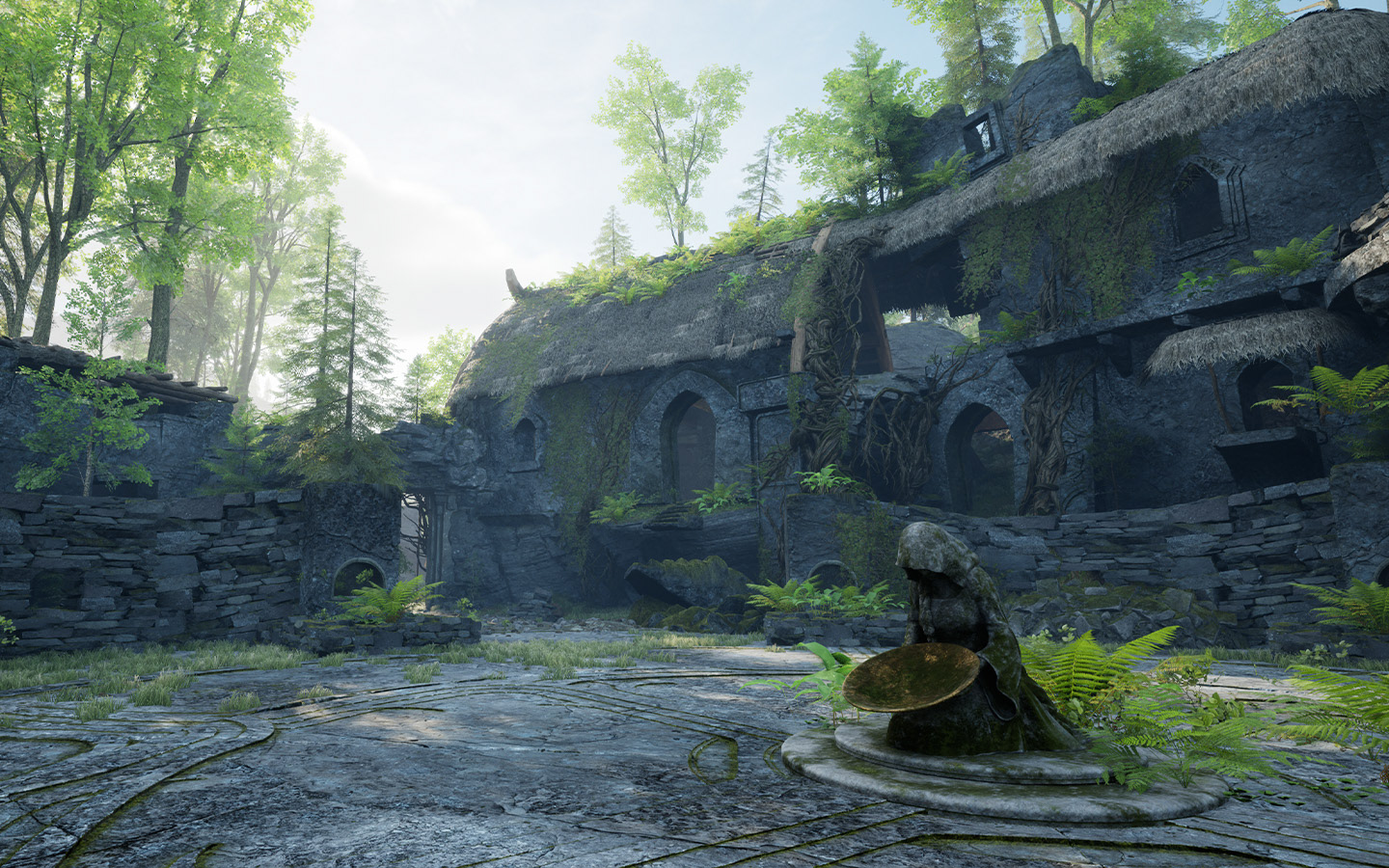
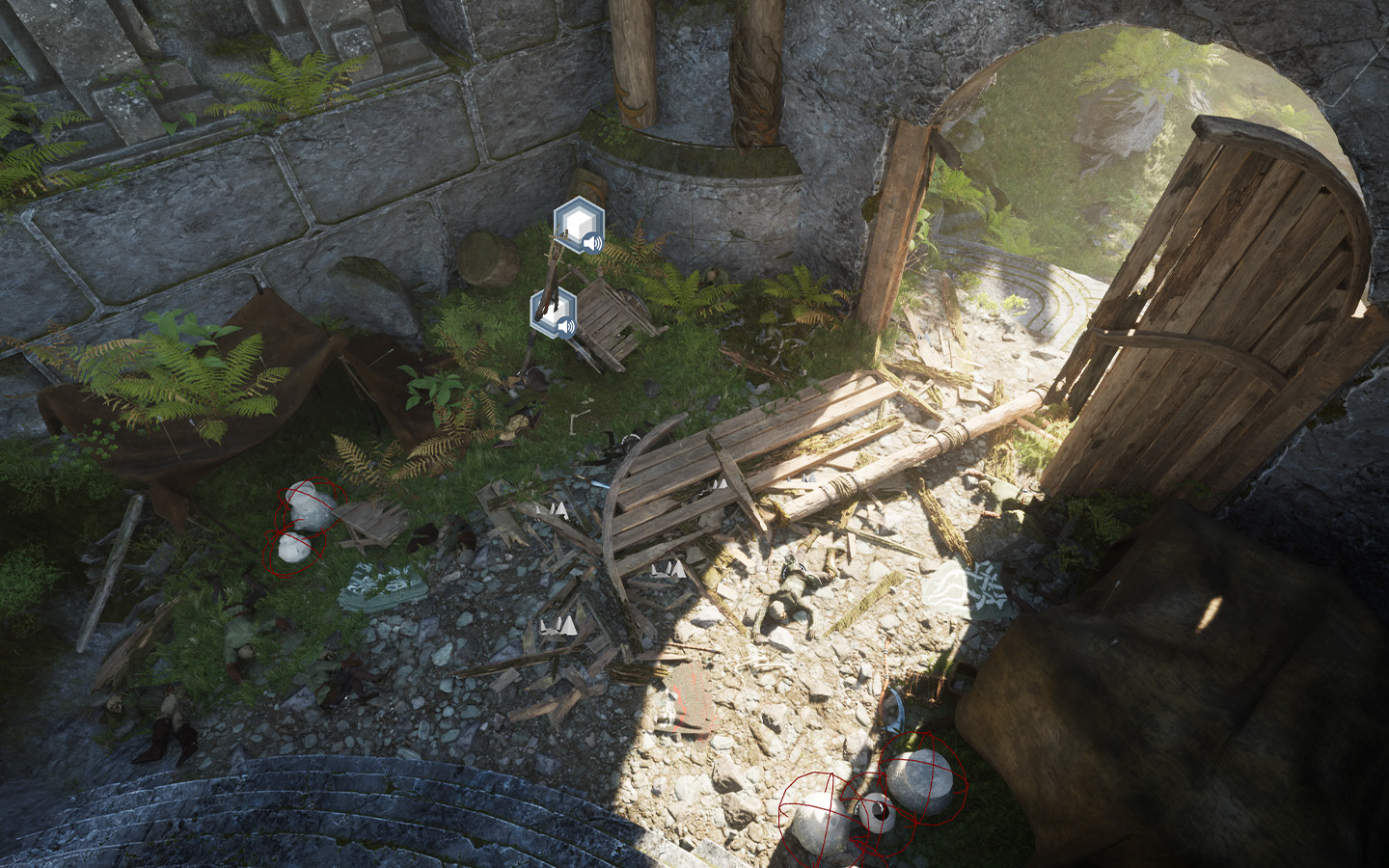
When I was working on a building or a point of interest, I always thought of the people who had lived there. Events that had or could have taken place. 
You may also like

Back to Top