Role & Contribution
Environment Artist - Responsible for the full-cycle creation of a highly realistic cave level for the upcoming game Instinction.
Asset Integrator & Optimizer - Managed the sourcing, texturing, and implementation of high-resolution assets while ensuring the level maintained optimal performance within Unreal Engine.
Lighting Artist - Developed the atmospheric lighting scheme, including detailed volumetric lighting and material emissive properties to achieve a deep, natural cave mood.
Goal & Challenge 
The primary goal was to create a dark, realistic, and visually compelling cave system that could serve as an integral exploration space within the game world. The main challenge was achieving photo-realistic fidelity in a subterranean environment, balancing extreme low-light conditions with the necessity of visual clarity for gameplay and pathfinding.
Process & Creative Strategy 
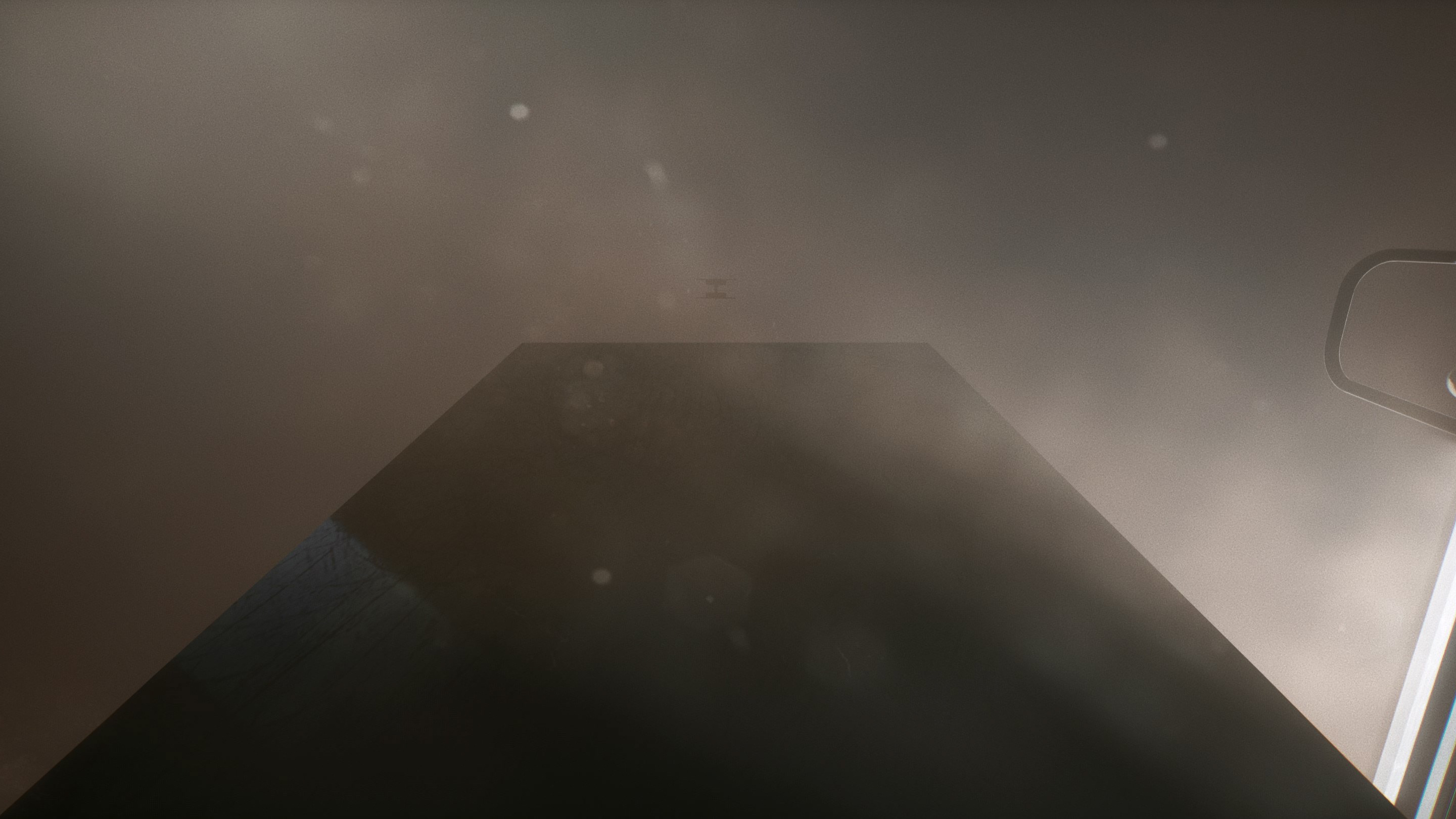
The environment was built with modularity and realism as the top priorities, ensuring a production-ready asset. The process began with concept interpretation and blockout modeling to define the scale and flow of the cave system before high-fidelity asset integration. Complex layered materials were employed for the rock and water surfaces to capture realistic subsurface scattering, wetness, and grime accumulation typical of cave environments. Volumetric fog and lighting was used to enhance the depth and mysterious quality of the space, simulating the diffusion of light entering from cracks or light sources. Spot and point lights were carefully placed to define pathways and highlight points of interest for players.

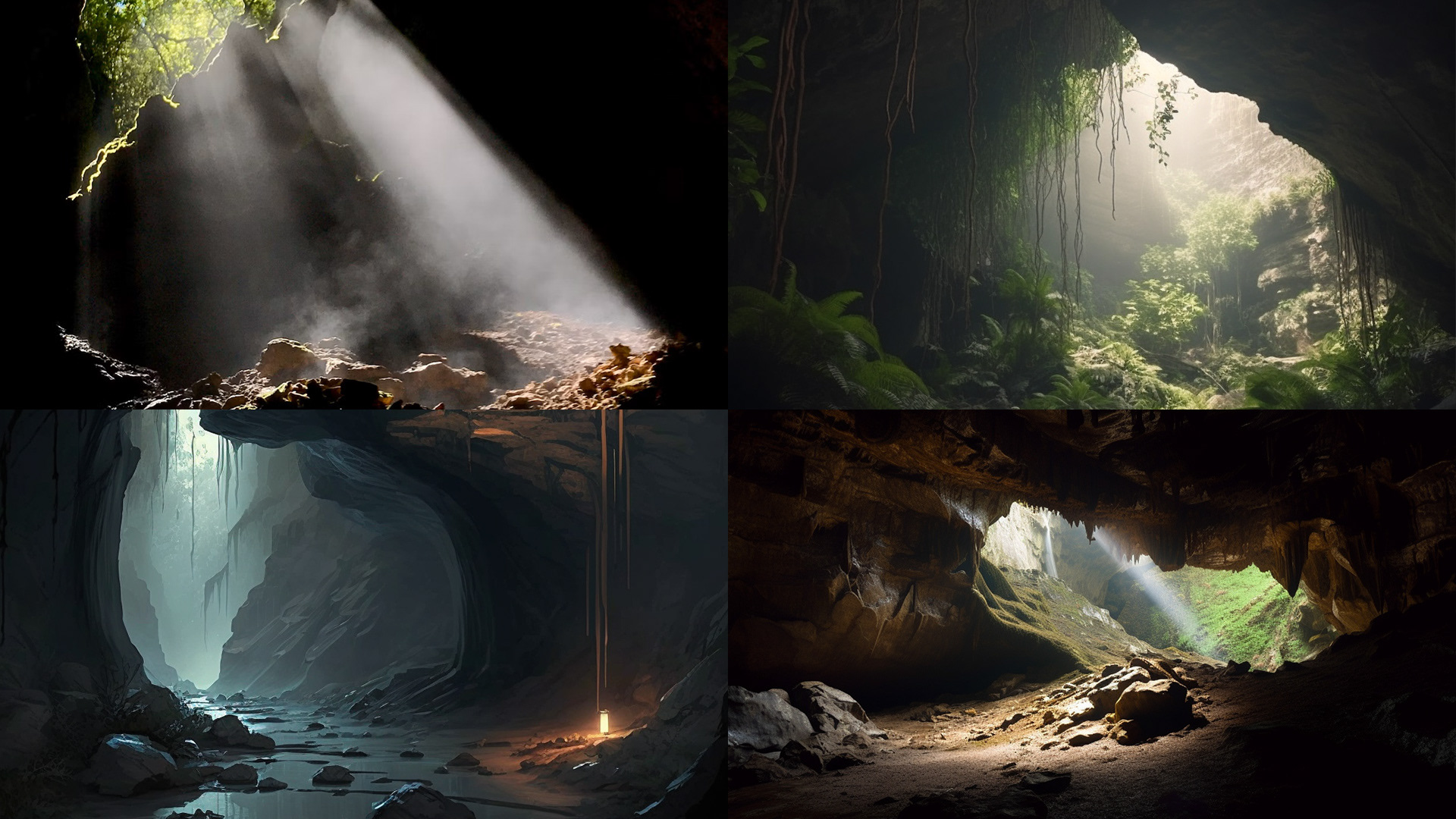
References for the cave environment that was to be built.
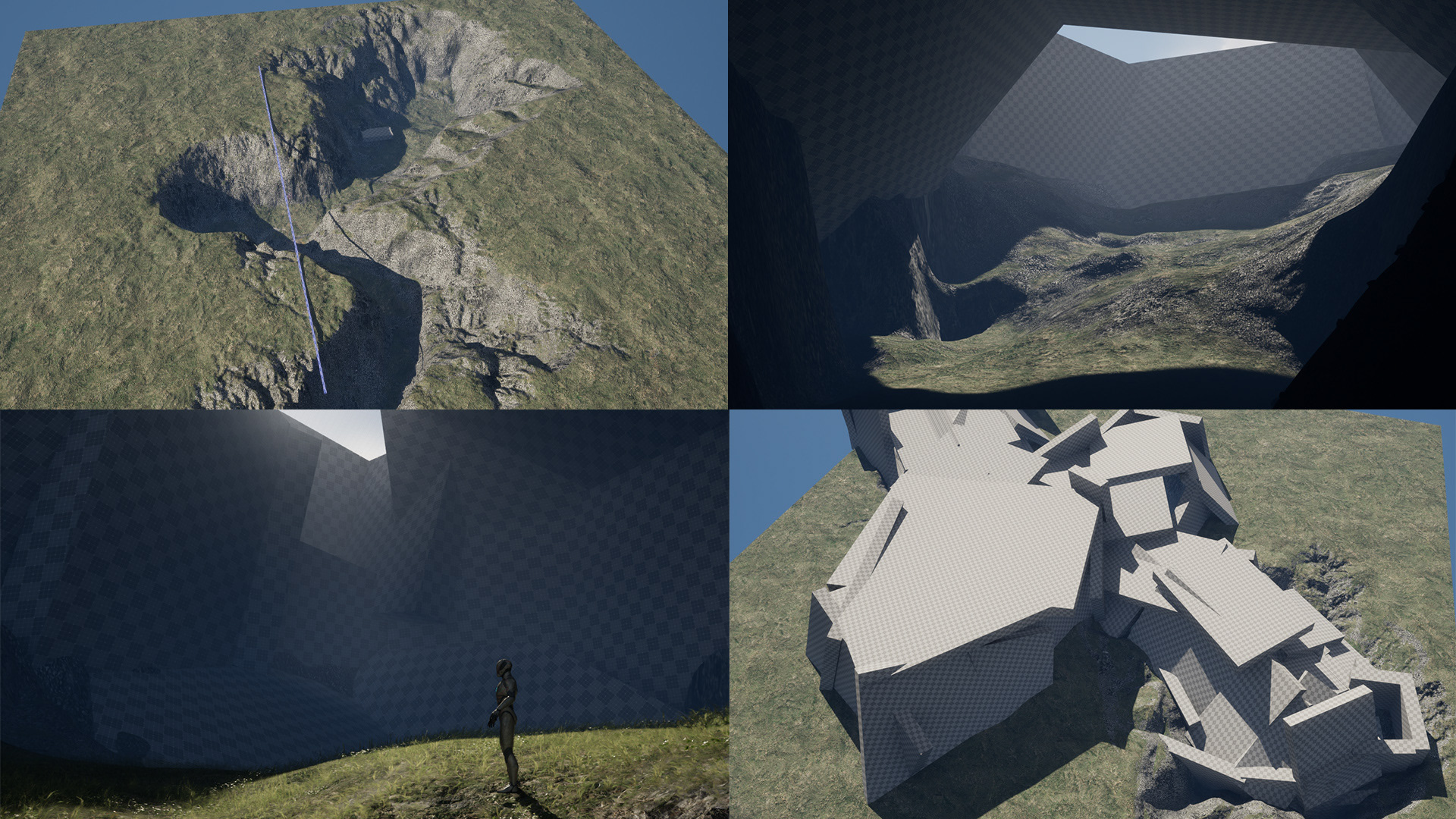
Blocking out the cave level with landscape and whiteboxing.
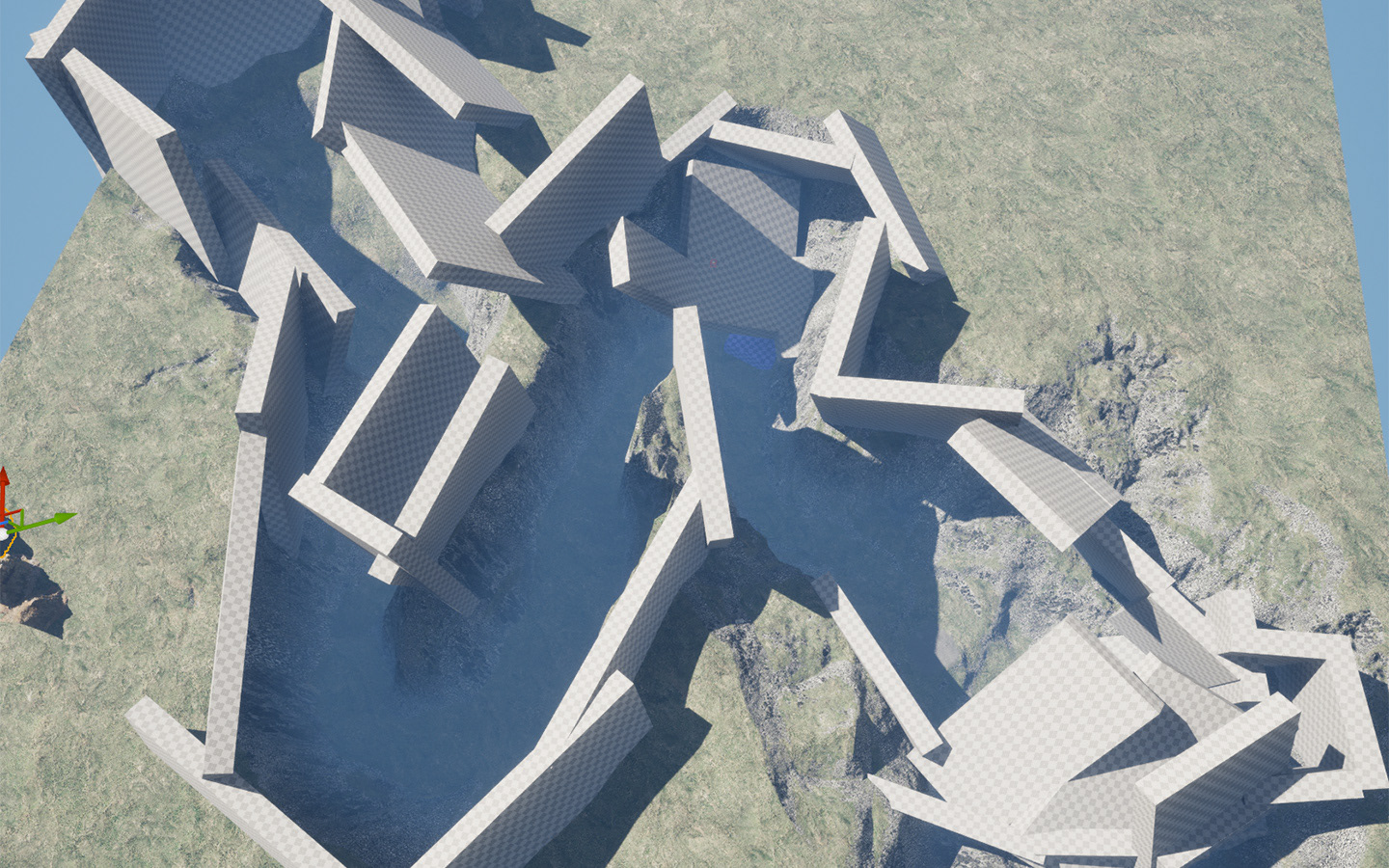
Scale, distance and depth was the biggest consideration while working on the whiteboxing.
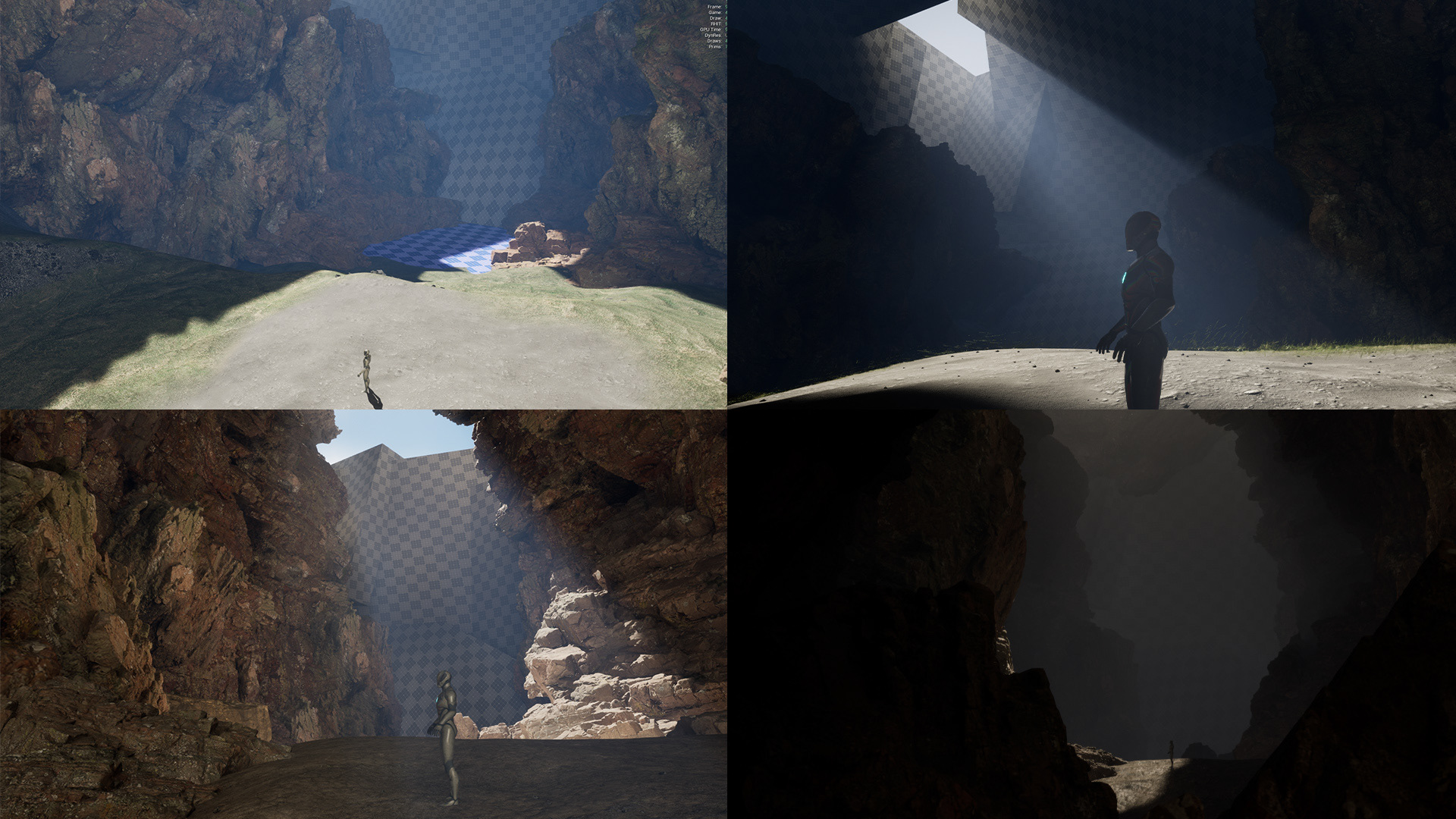
Started meshing the walls soon after the scale was dialled down. At this point, the look or silhouettes of the rock formations weren't final so the focus was more on getting the lighting correct, figuring out correct line of sight, view distances etc.
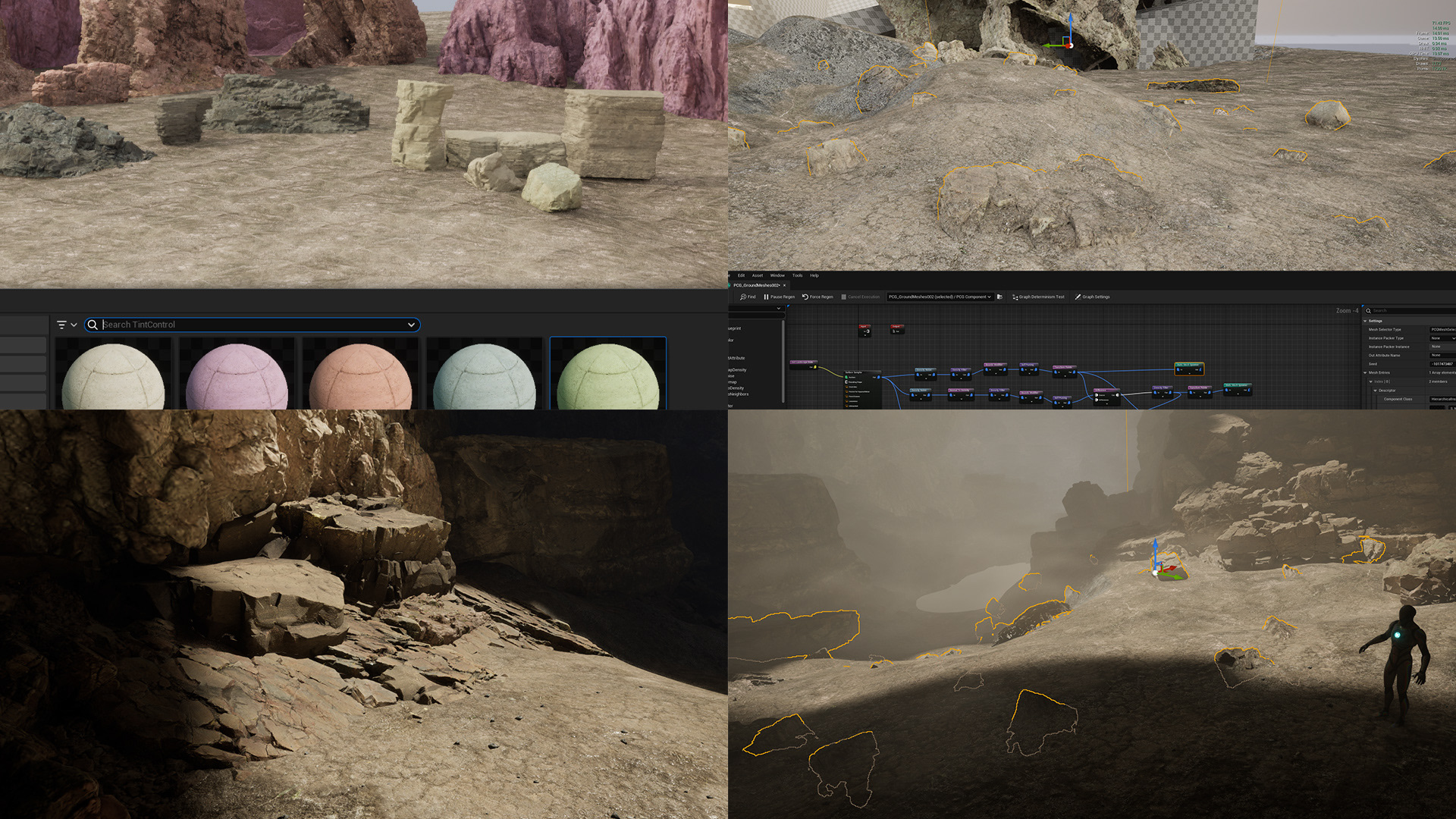
Master material instances were intergrated into the workflow for easily getting all the assets to match their look and feel.
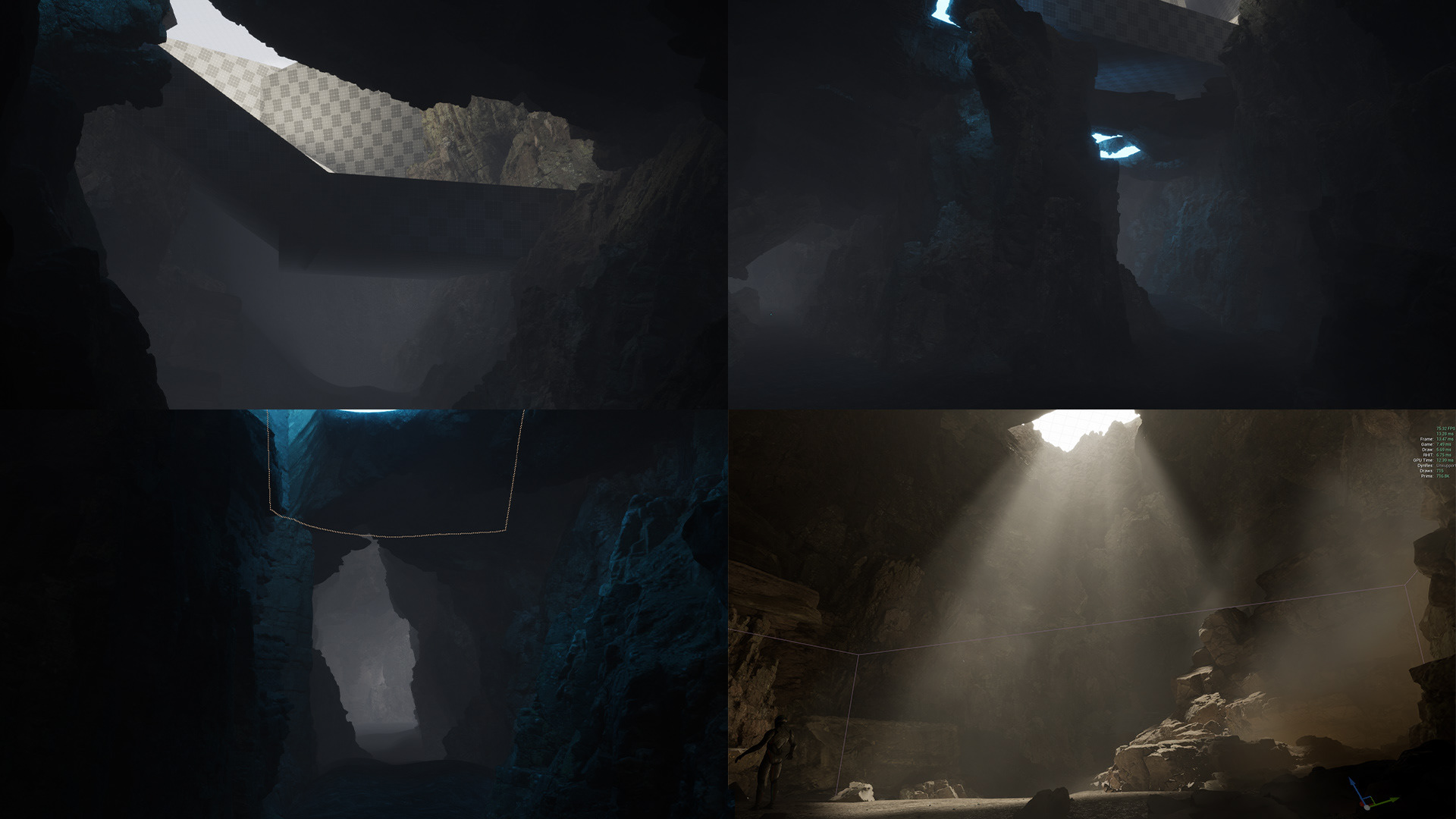
There were varied lighting situations in different spots of the cave as per the original concept.
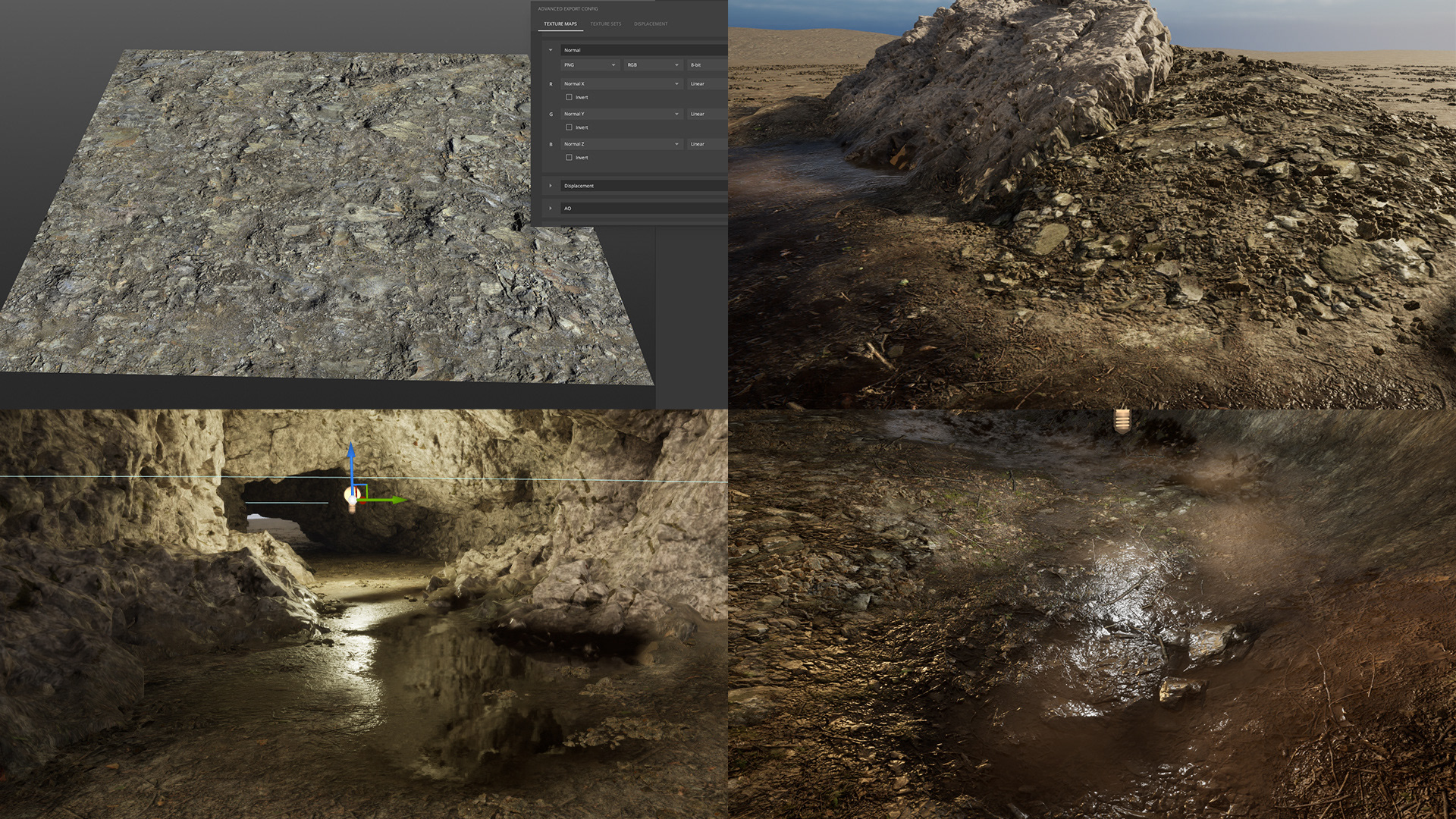
In a separate level, I developed the landscape material from existing assets to create something I could use for the cave floor.
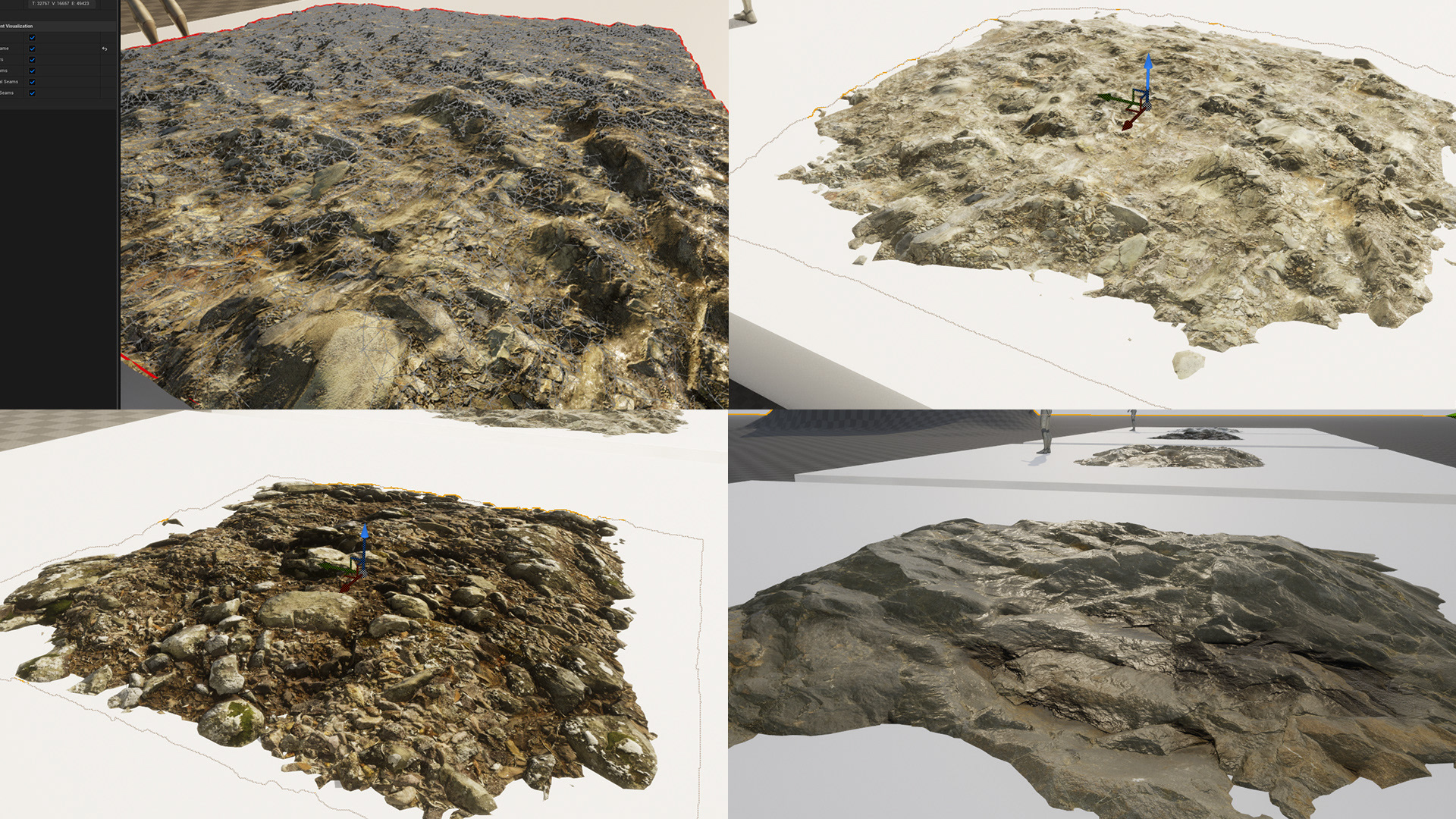
I also made custom ground meshes which could be used in conjunction with the landscape. These meshes have higher polygon counts so stategically placing these meshes elevated the overall fidelity of the environment.
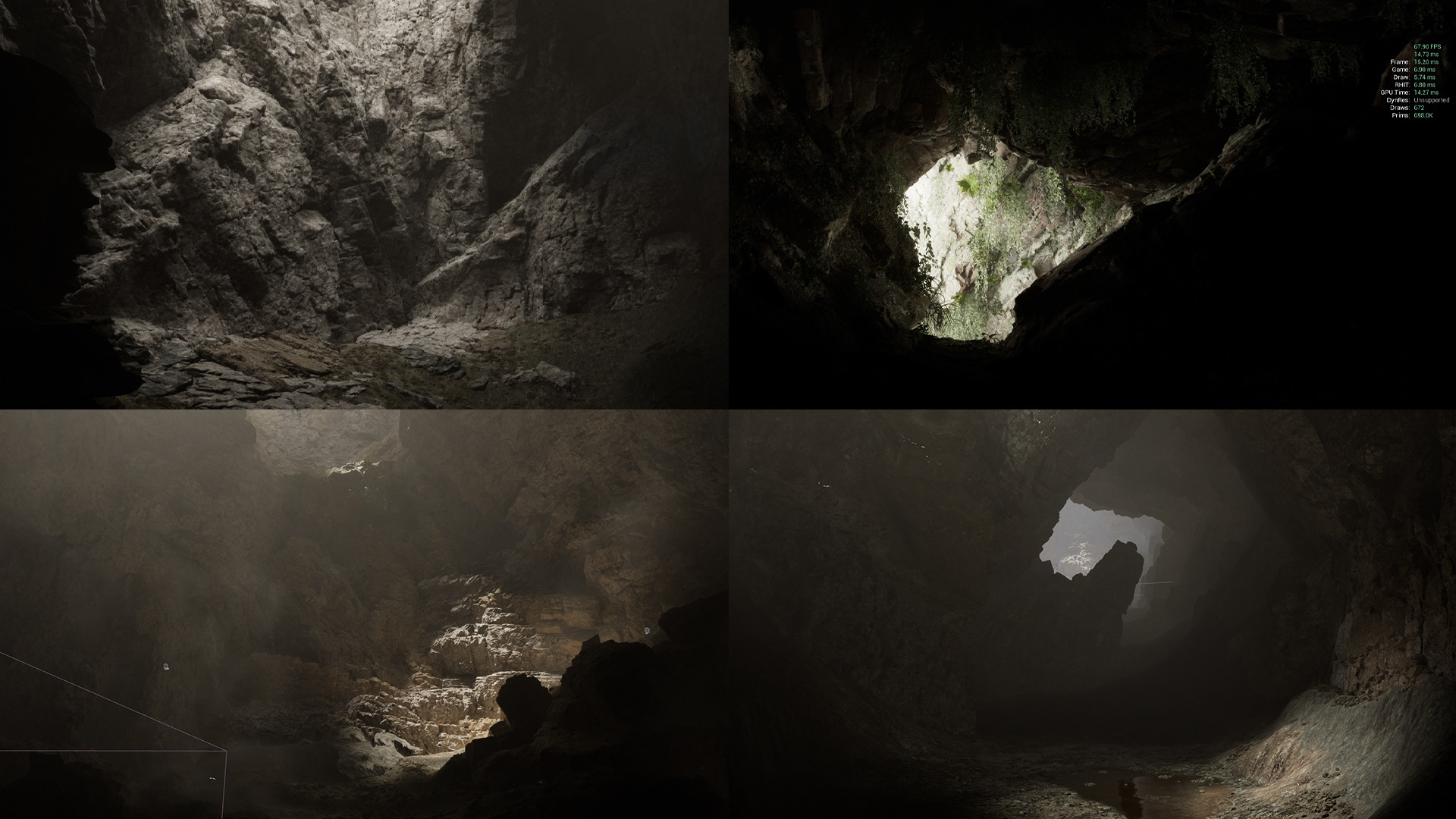
More detailed meshing work to create certain shapes and testing foliage in brighter areas of the cave.
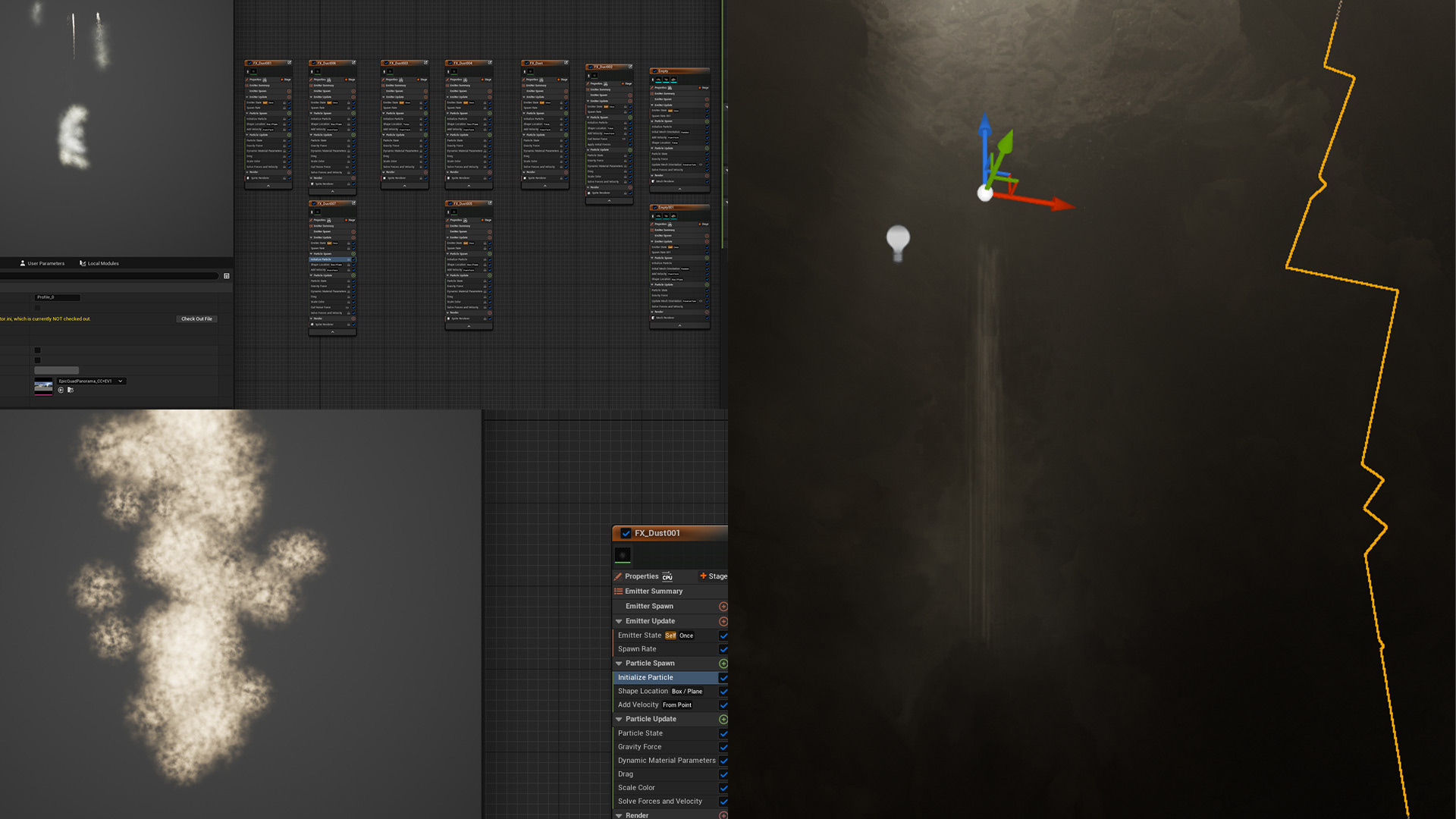
Niagara tool used to create falling rock and dust particle effect.
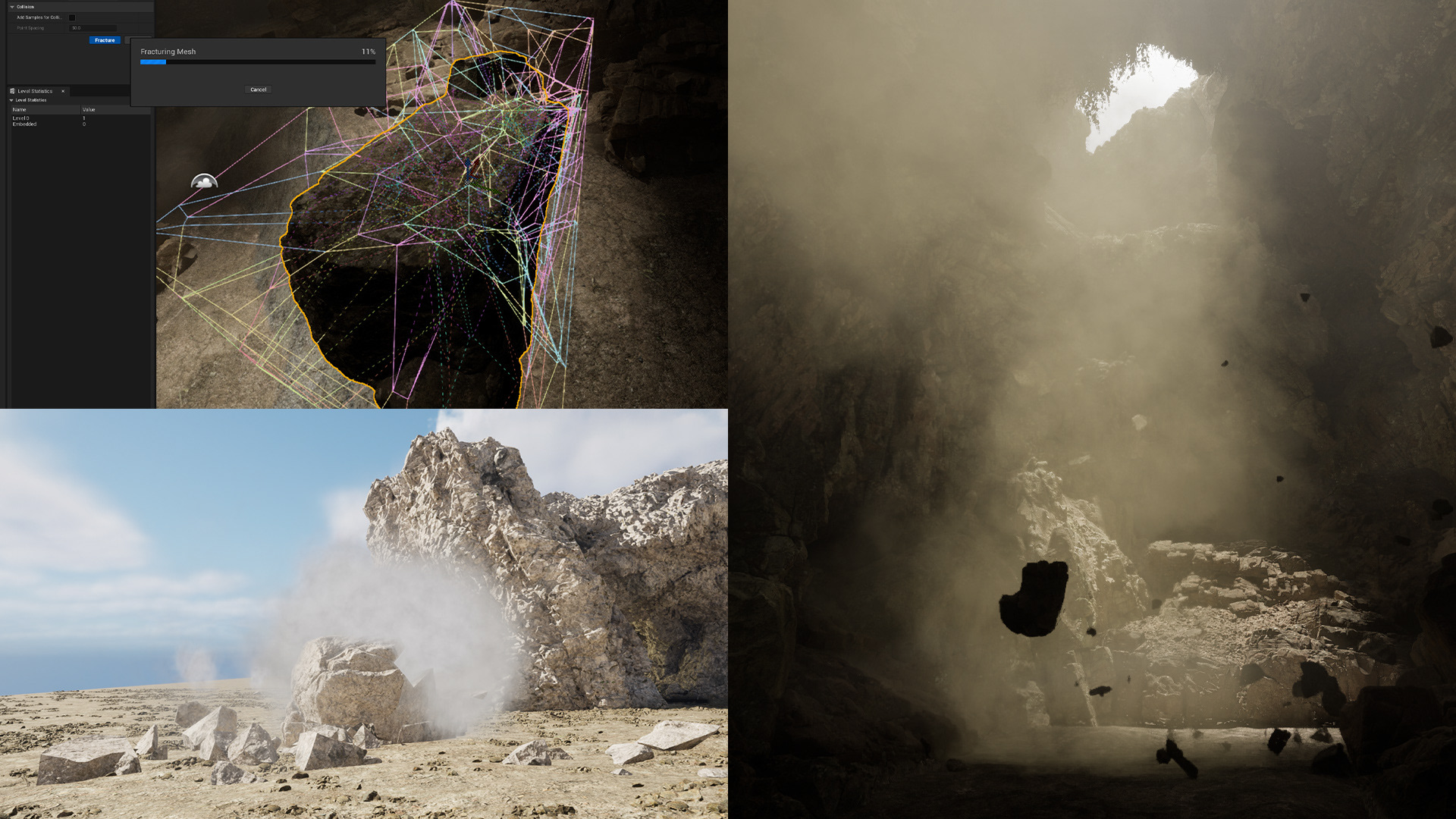
Chaos tool was used in conjunction with Niagara to create an effect where bigger rocks were tumbling down with smaller rocks, dust and smoke.
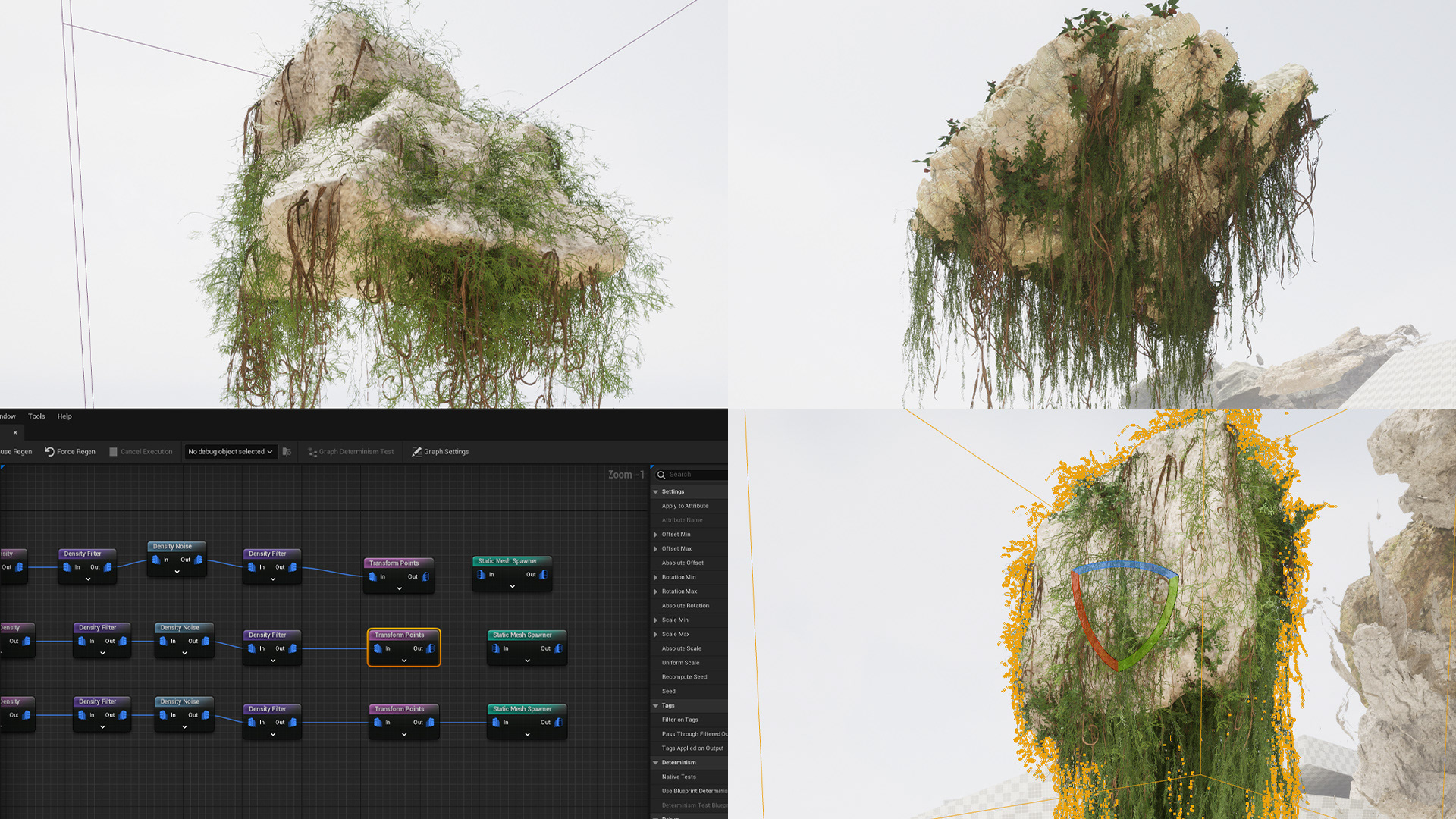
I used the PCG graph to automatically spawn foliage on rock meshes.
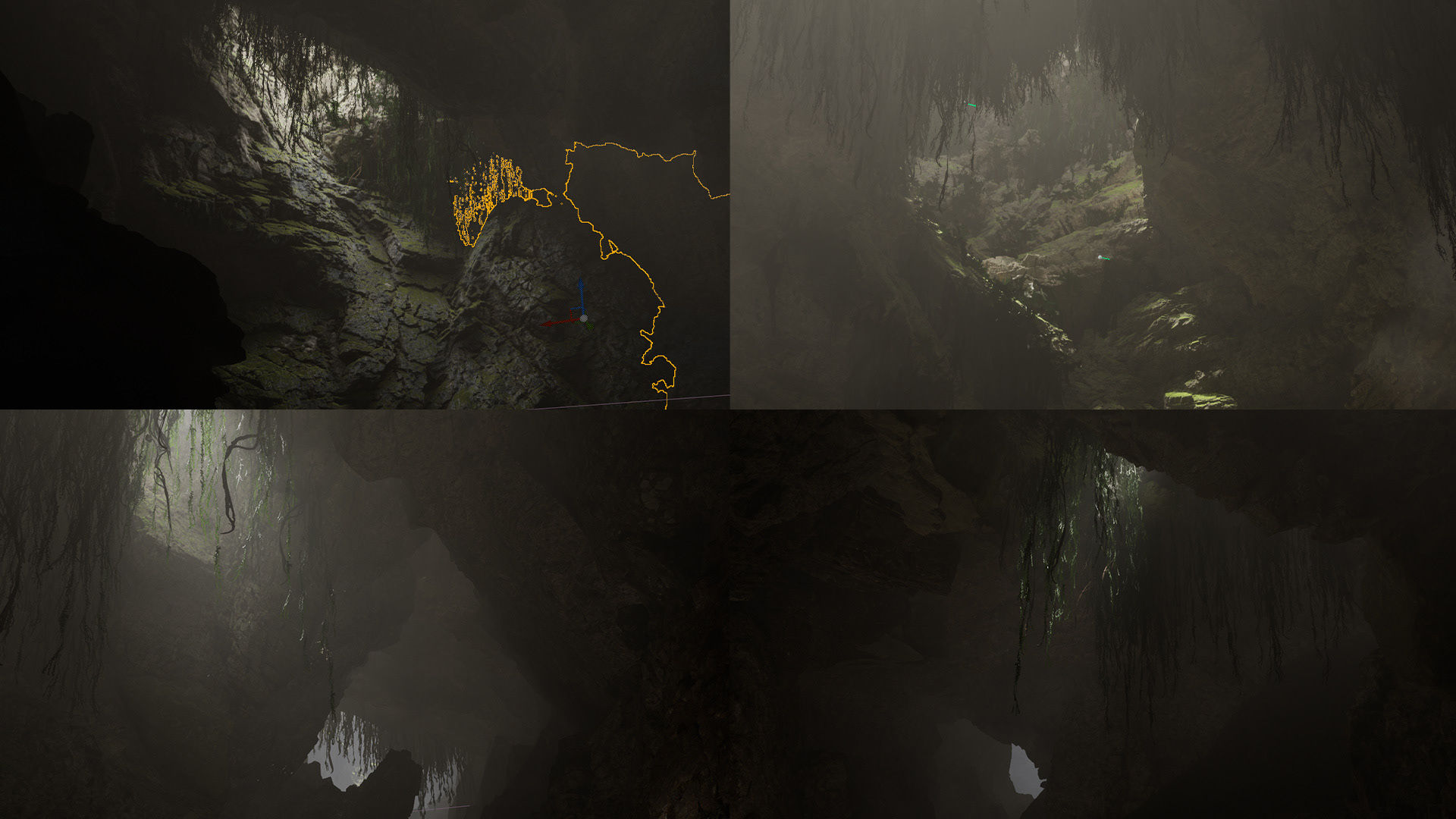
The procedural rock and foliage were placed in various openings of the cave. With consideration of lighting, look and feel.
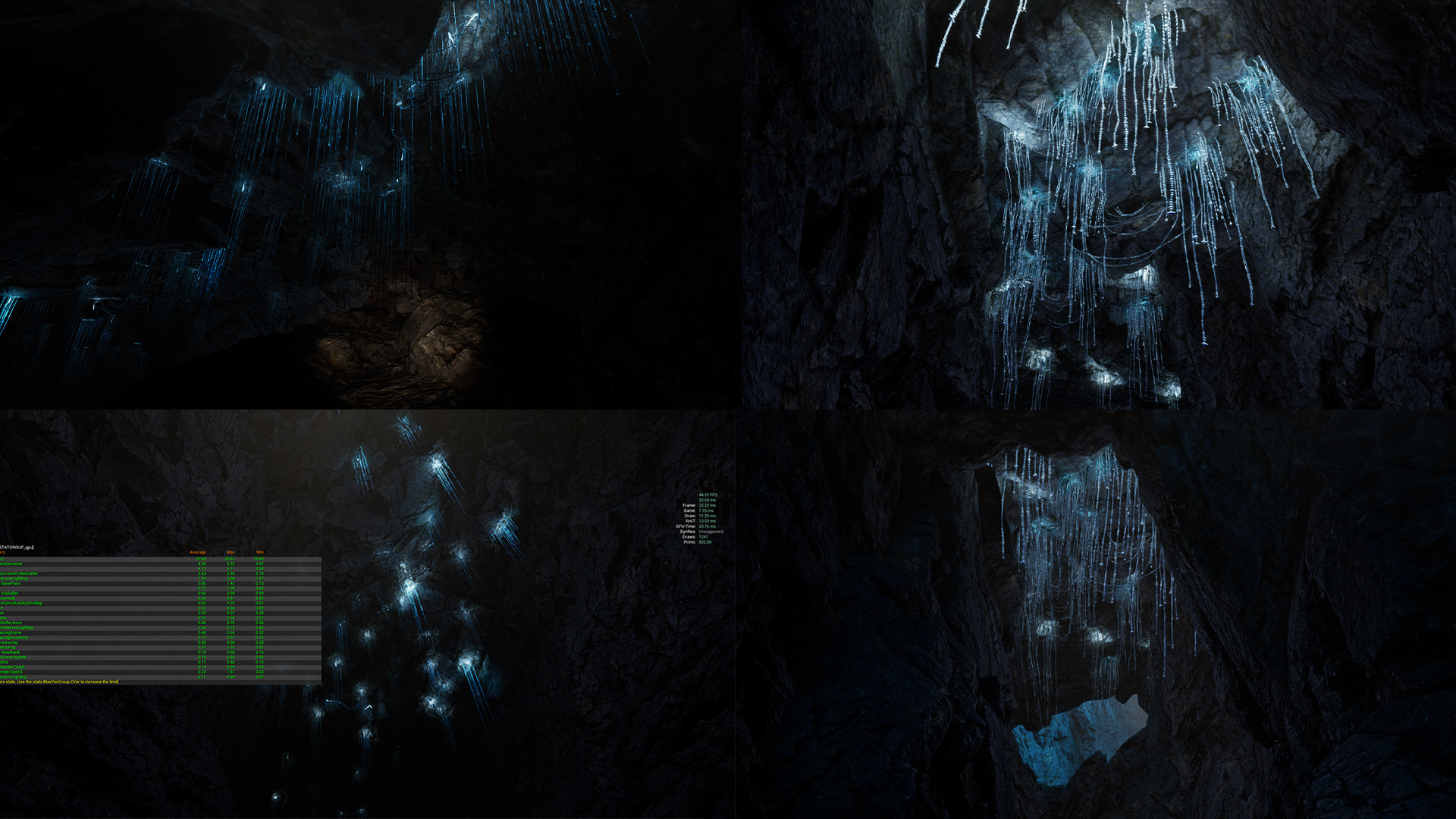
Glowworm assets were added to another part of the cave ceiling.
You may also like

Back to Top