Role & contibution
Director / Producer - Conceptualized the narrative arc, visual concept and produced the storyboard during pre-production. Produced the 3D environment, animation and sequence for the final outcome.
Environment Artist - Created the 3D environments for the various shots of the trailer with the level of fidelity in mind while keeping the project optimized and manageable.
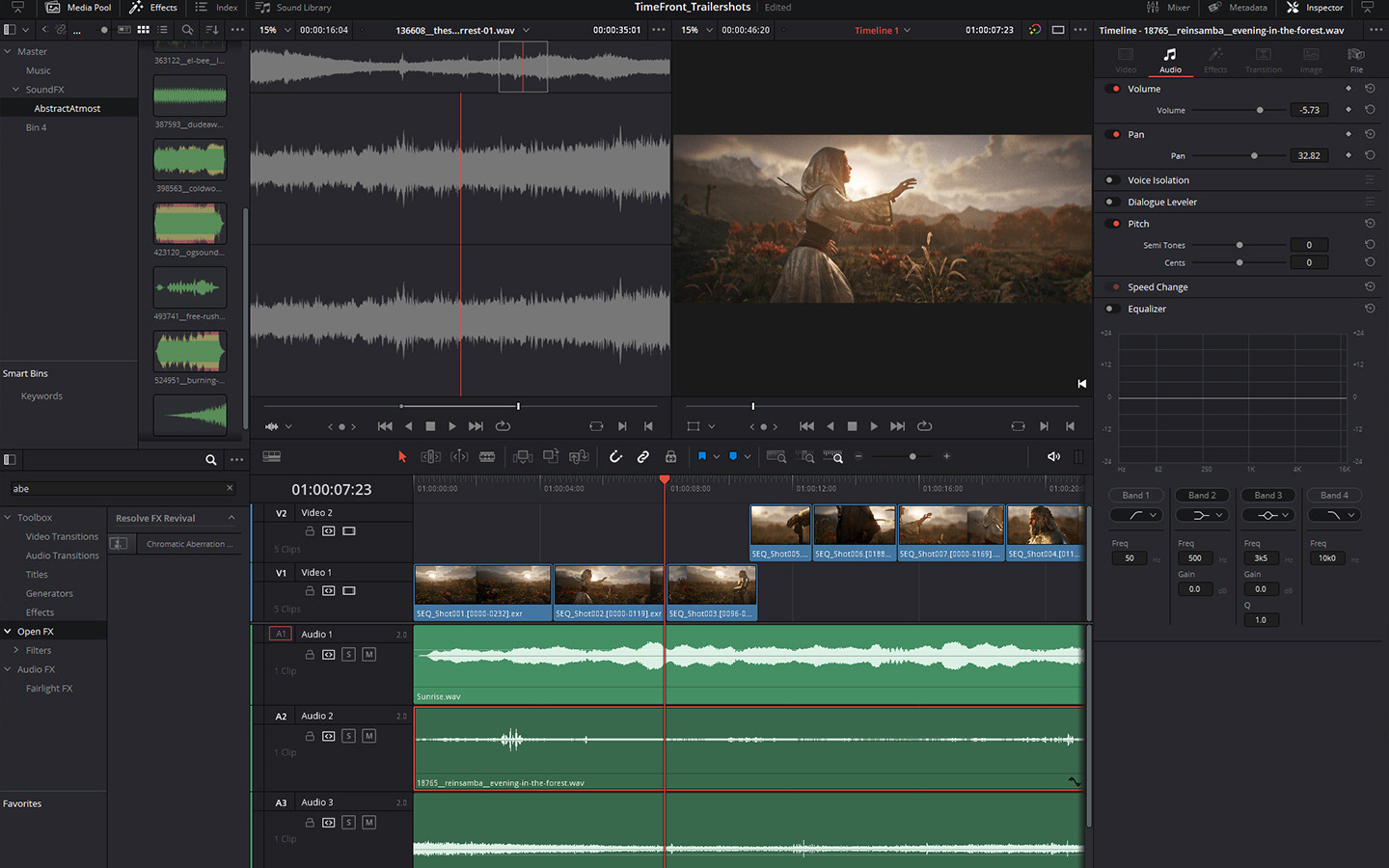
Cinematic Artist / Editor - Produced high quality rendered footage with cinematic lighting, 3D VFX and post processing. Edited and colour graded the shots for the final outcome.

Goal & Challenge
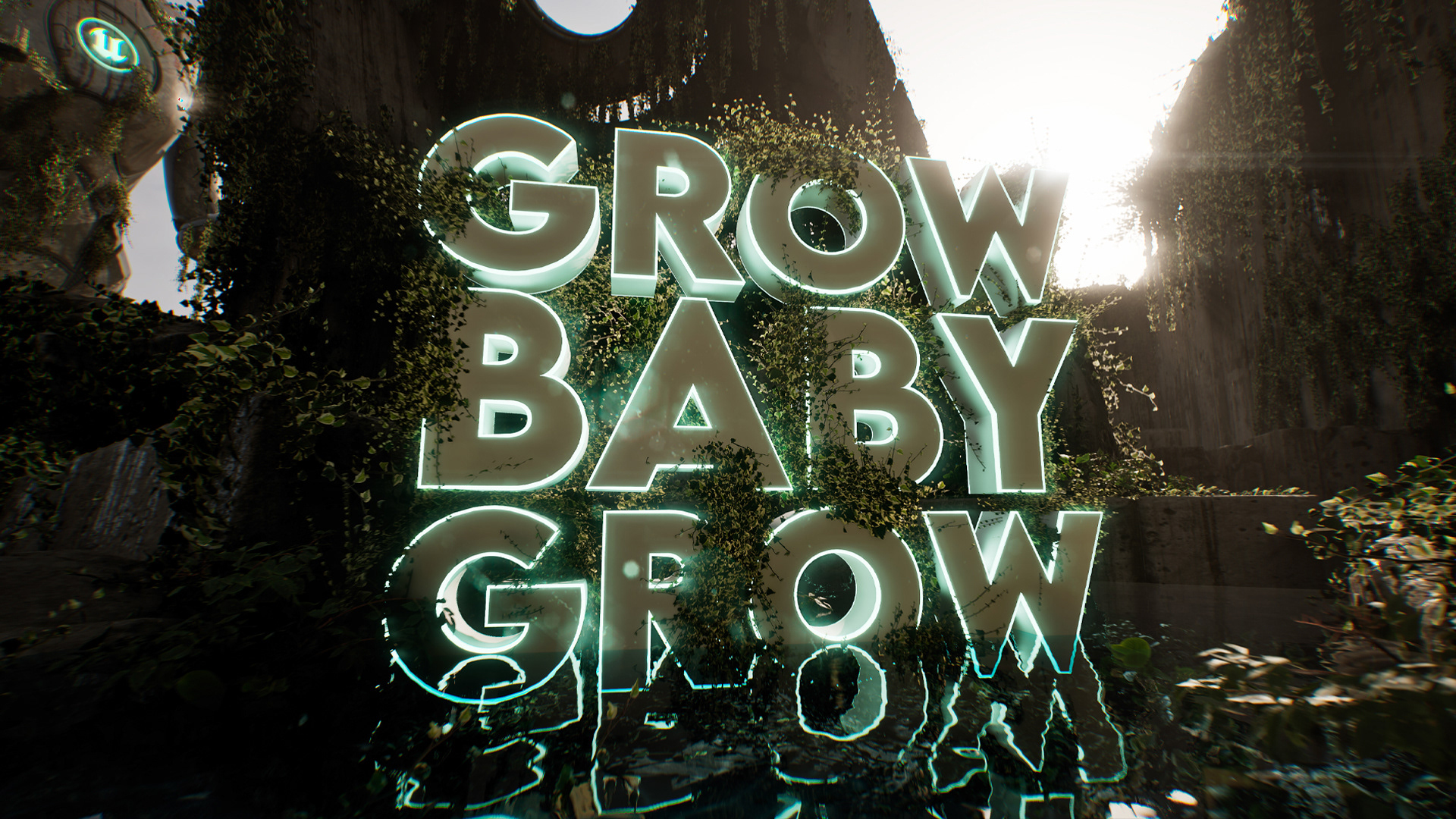
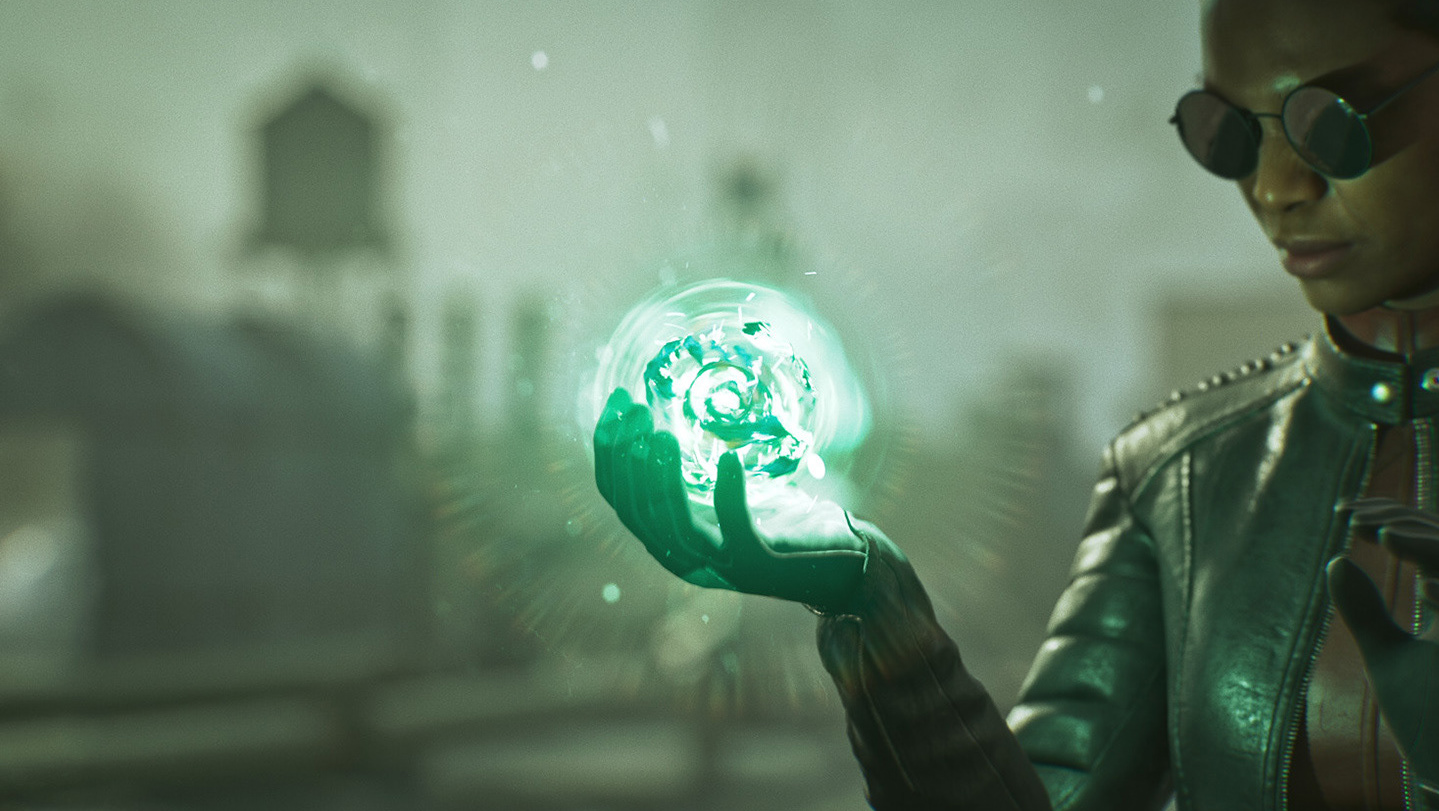
The primary goal was to create a cinematic trailer of the upcoming game Time Front. The main challenge of this project was in creating a high-quality, cohesive outcome with a dynamic, global start up team. There were also a series of limitations within Unreal Engine that we had to work around to achieve the fidelity that we wanted for this project.

Process & Creative Strategy 
This project demonstrates a full spectrum of real-time engine cinematic production, moving from concept to final edit within the Unreal Engine pipeline.
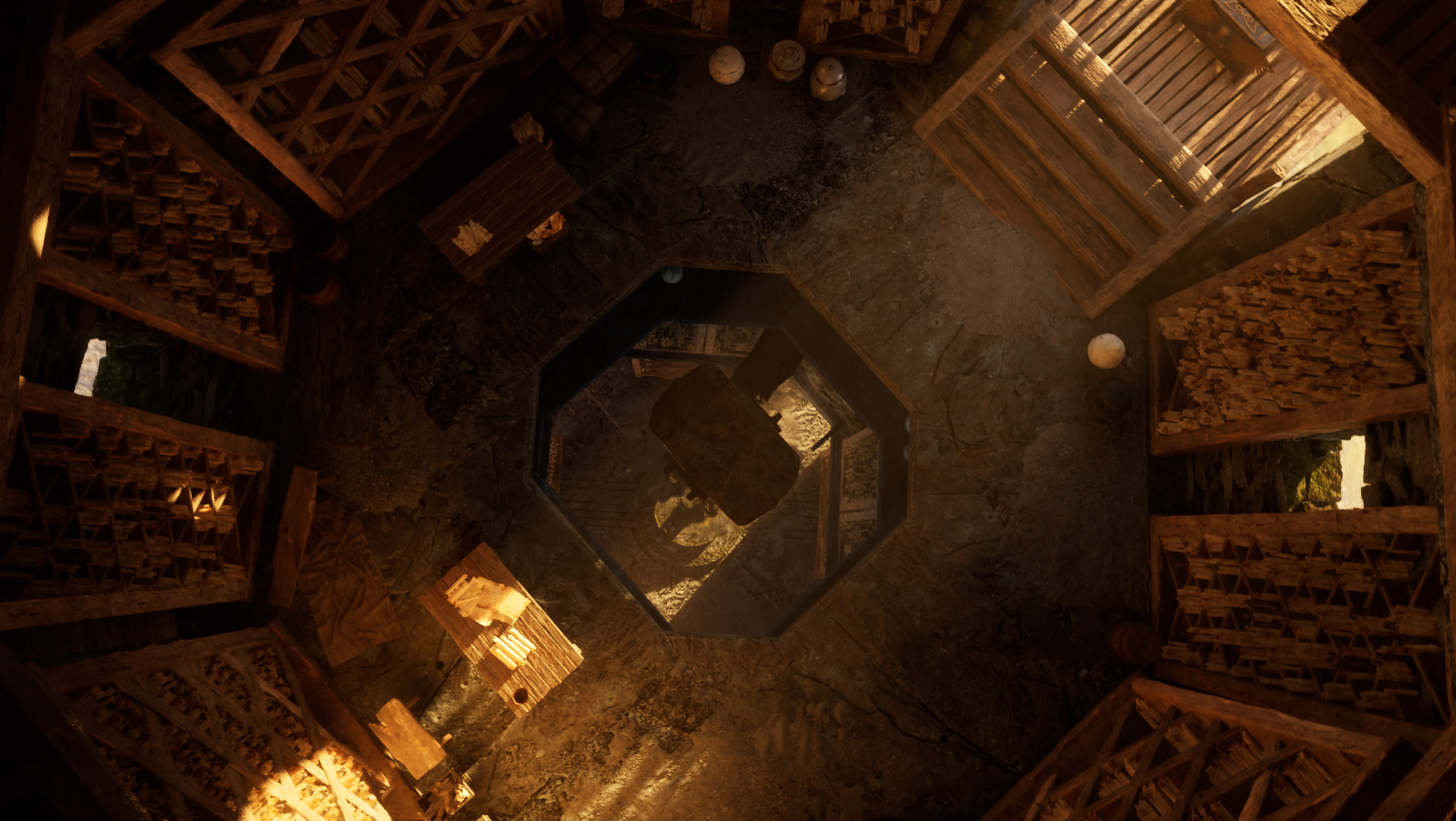
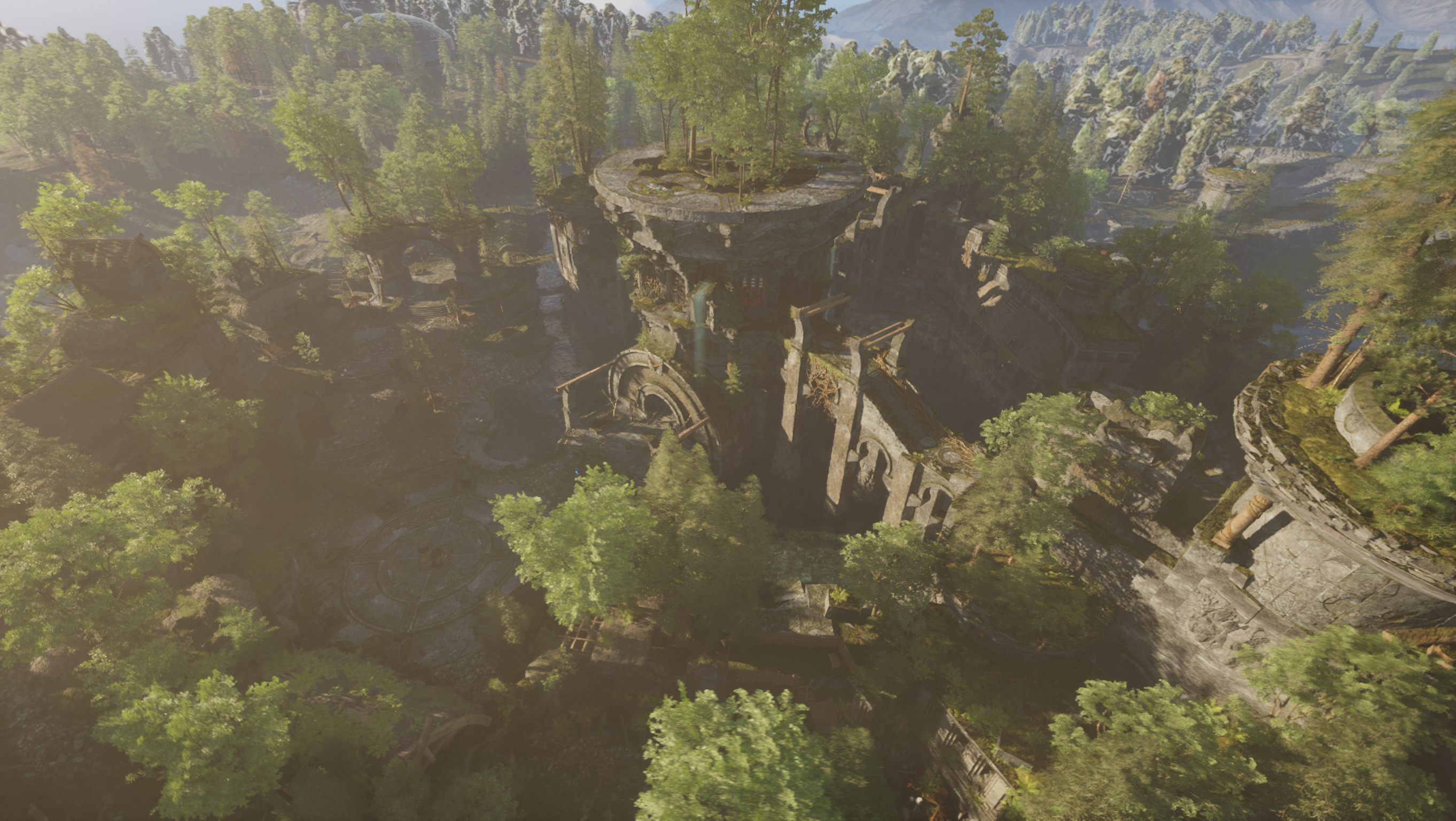
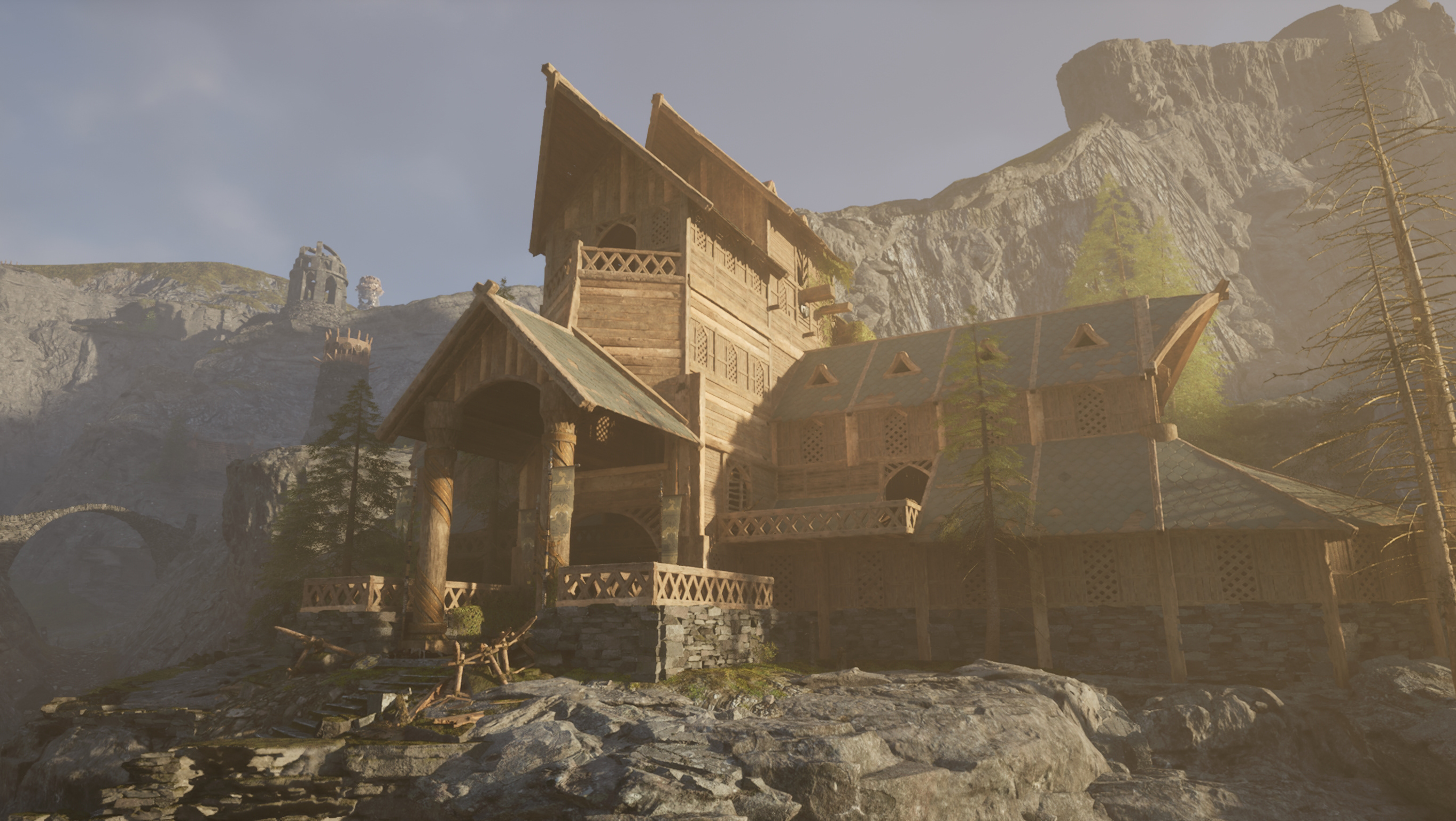
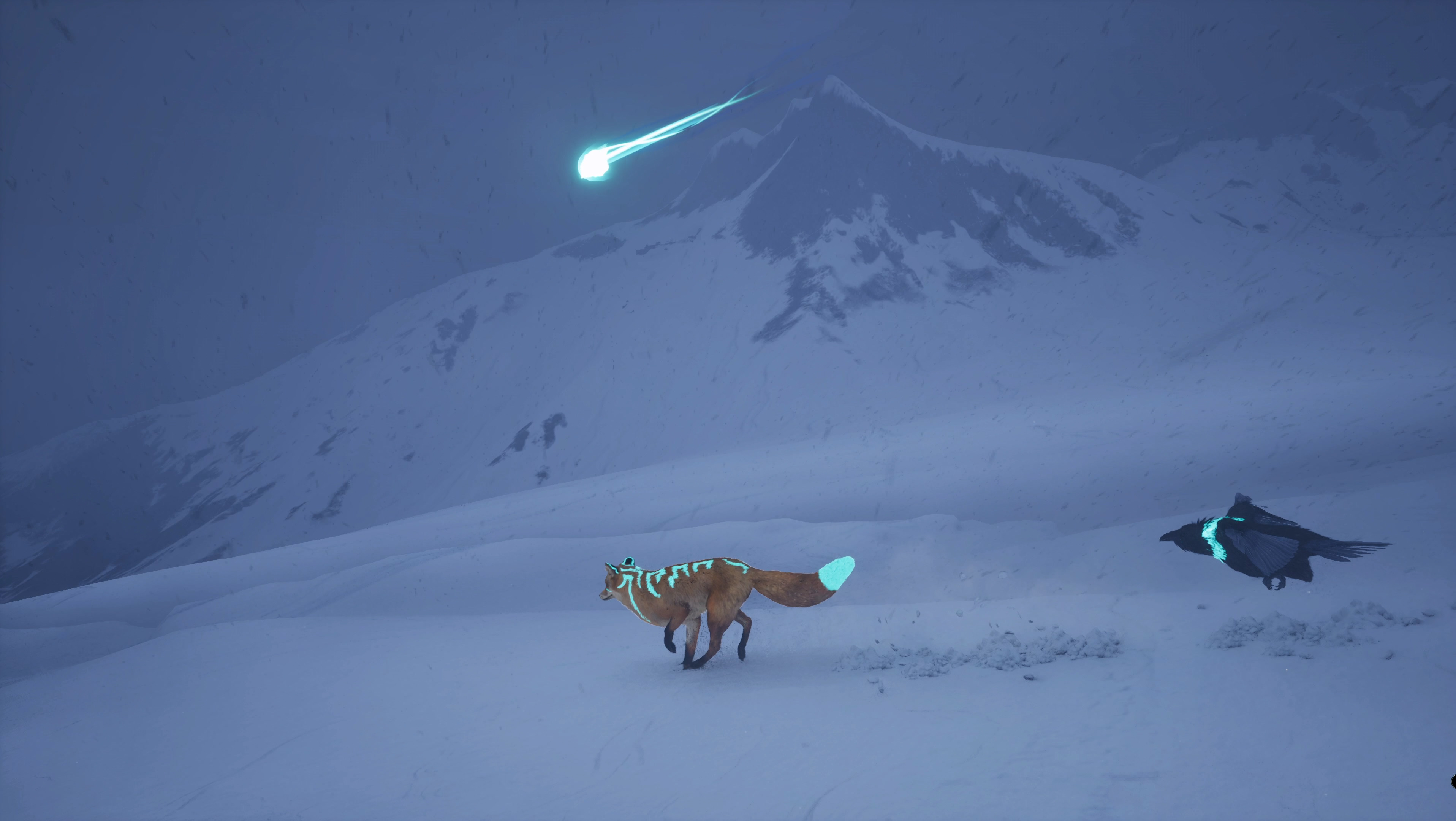
Environment & Fidelity: All environments were constructed in Unreal Engine, focusing on modular asset creation to quickly generate high-fidelity, varied landscapes (mountain ranges, ruined cities) while maintaining performance.
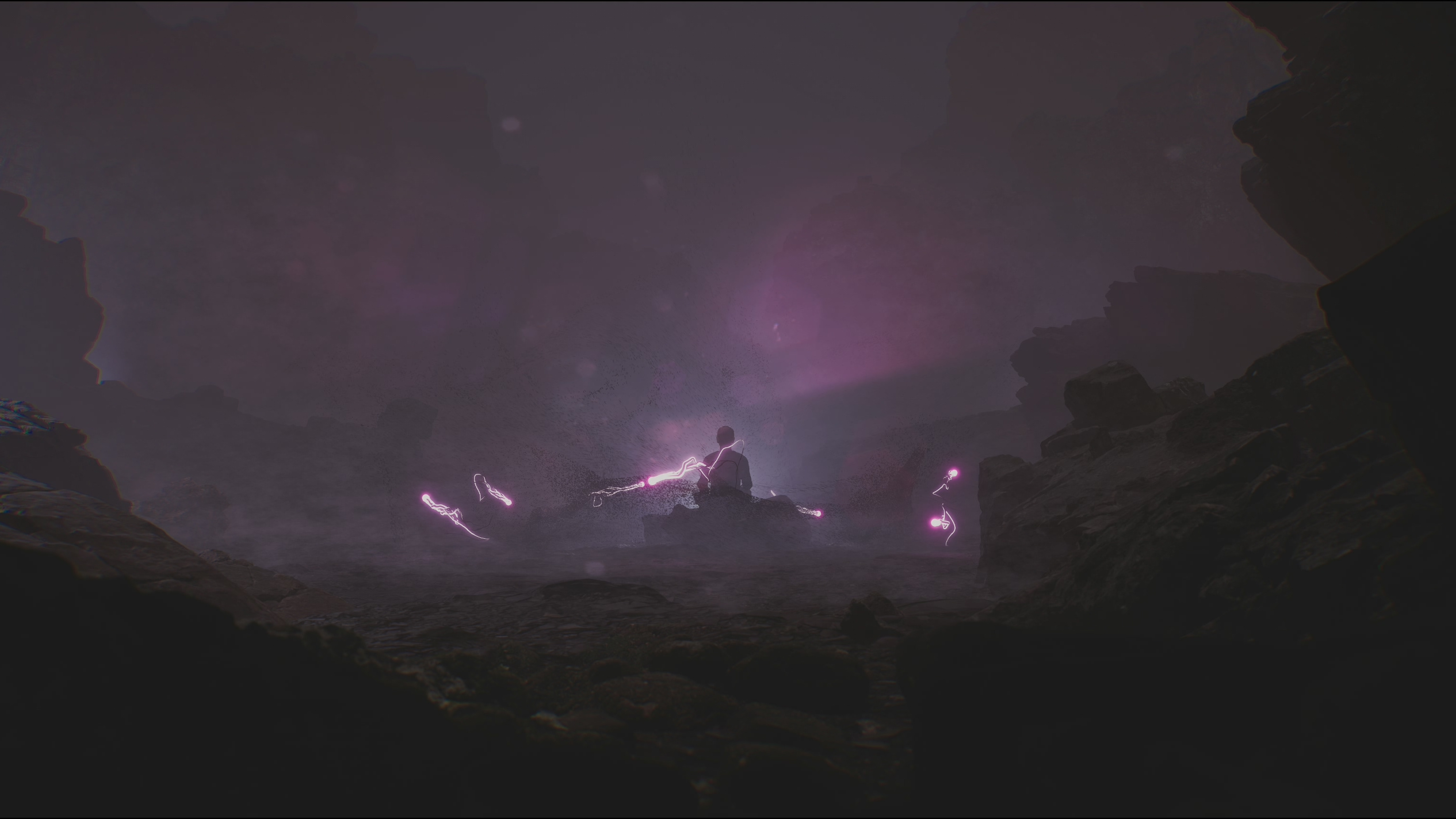
Cinematic Execution: The entire trailer was orchestrated using Unreal Engine's Sequencer. I developed custom camera animations, choreographed character actions, and implemented complex particle systems (like the debris and energy fields) to deliver dynamic, high-impact moments.
Look Development: Technical artistry was focused on real-time lighting and materials. I used advanced material functions and custom light setups to create a high-quality cinematic look for all of the shots.

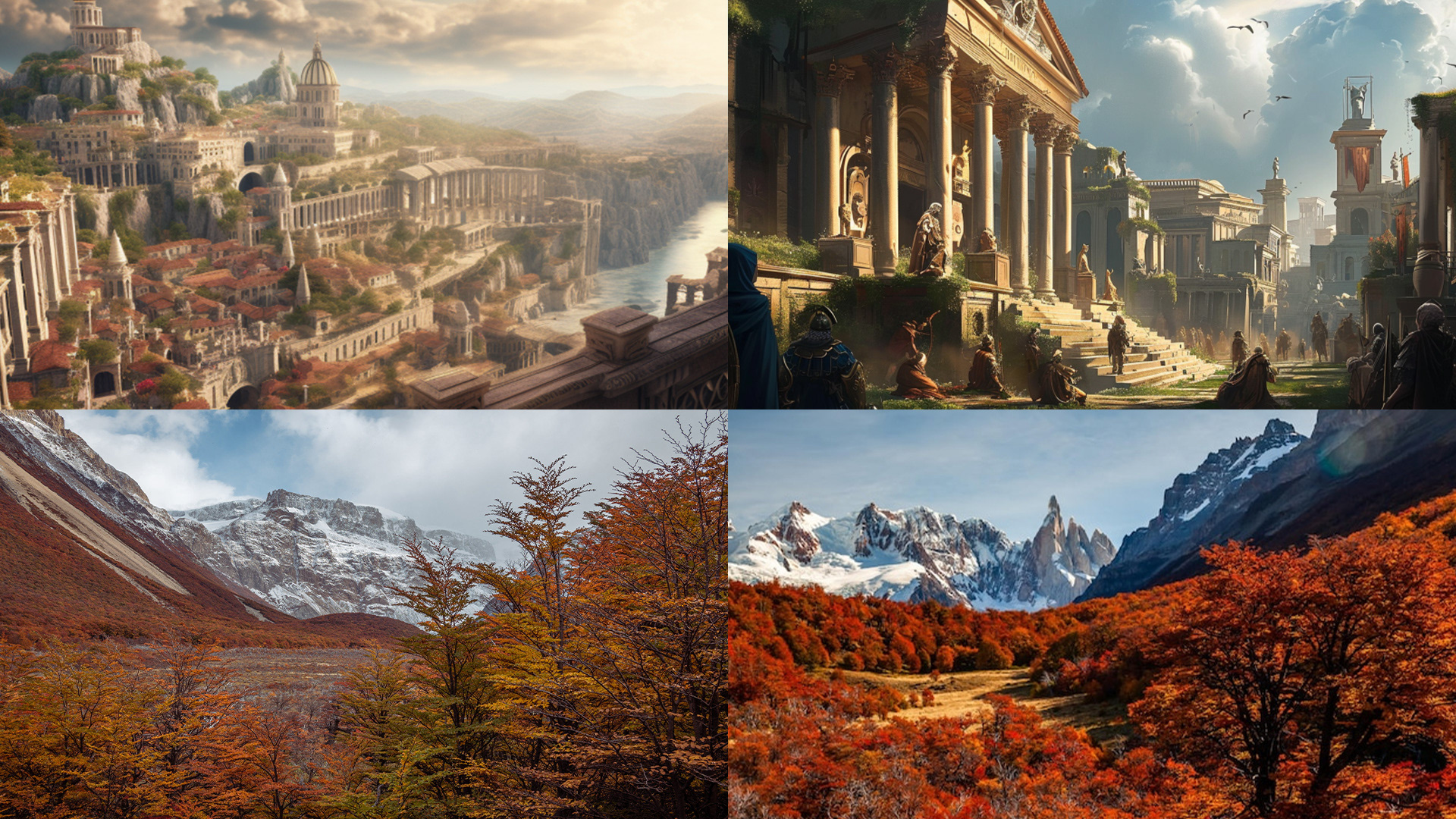
Using both generated and real reference for the environment, I could start envisioning the environment for the scenes that was being planned.
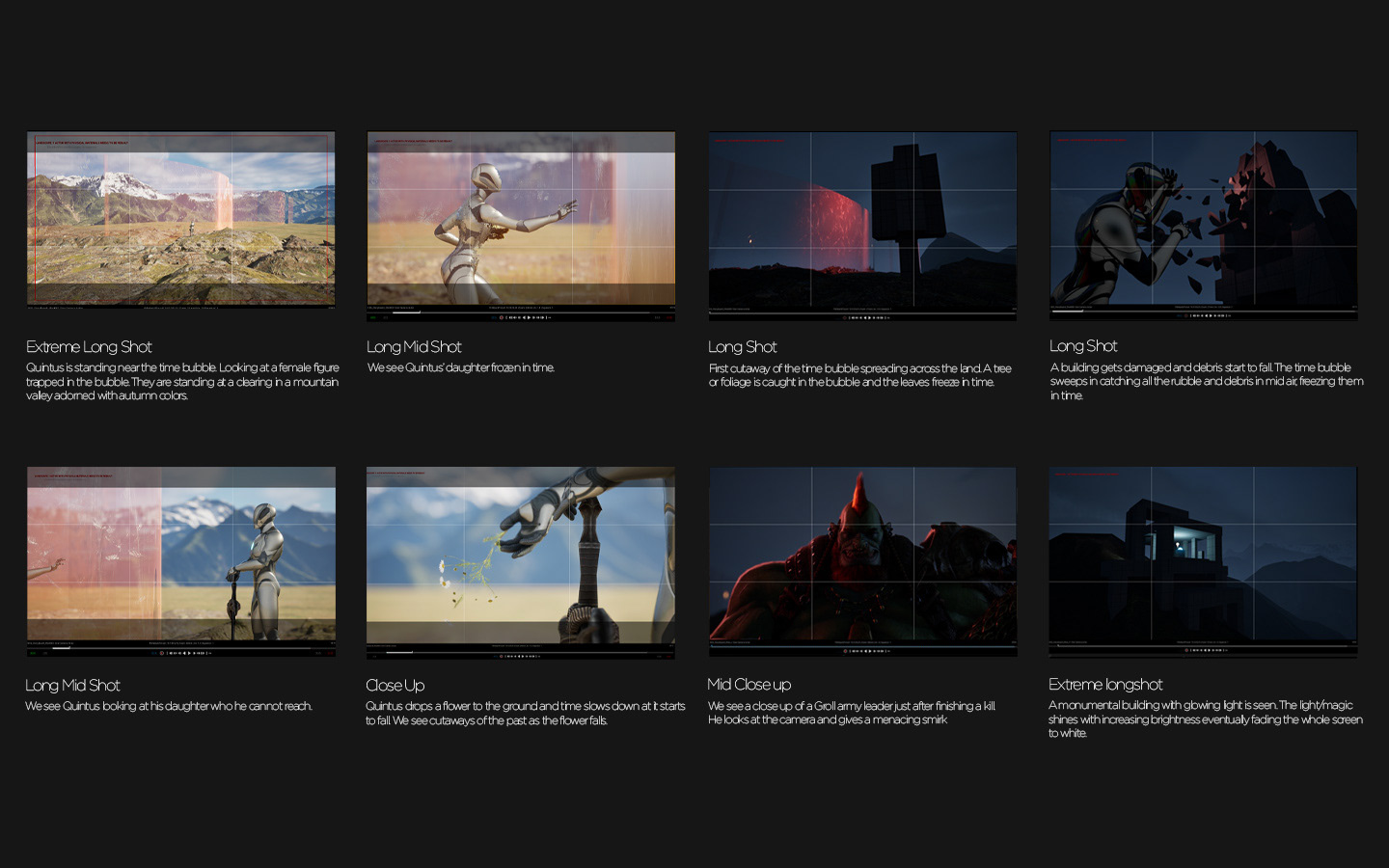
After a lot of iterations of the script and the mood board, I moved onto making the storyboard. The storyboard, which was made from taking screenshots from the game engine, was vital in figuring out what graphic assets and workflows we would need to pull together for each shot.
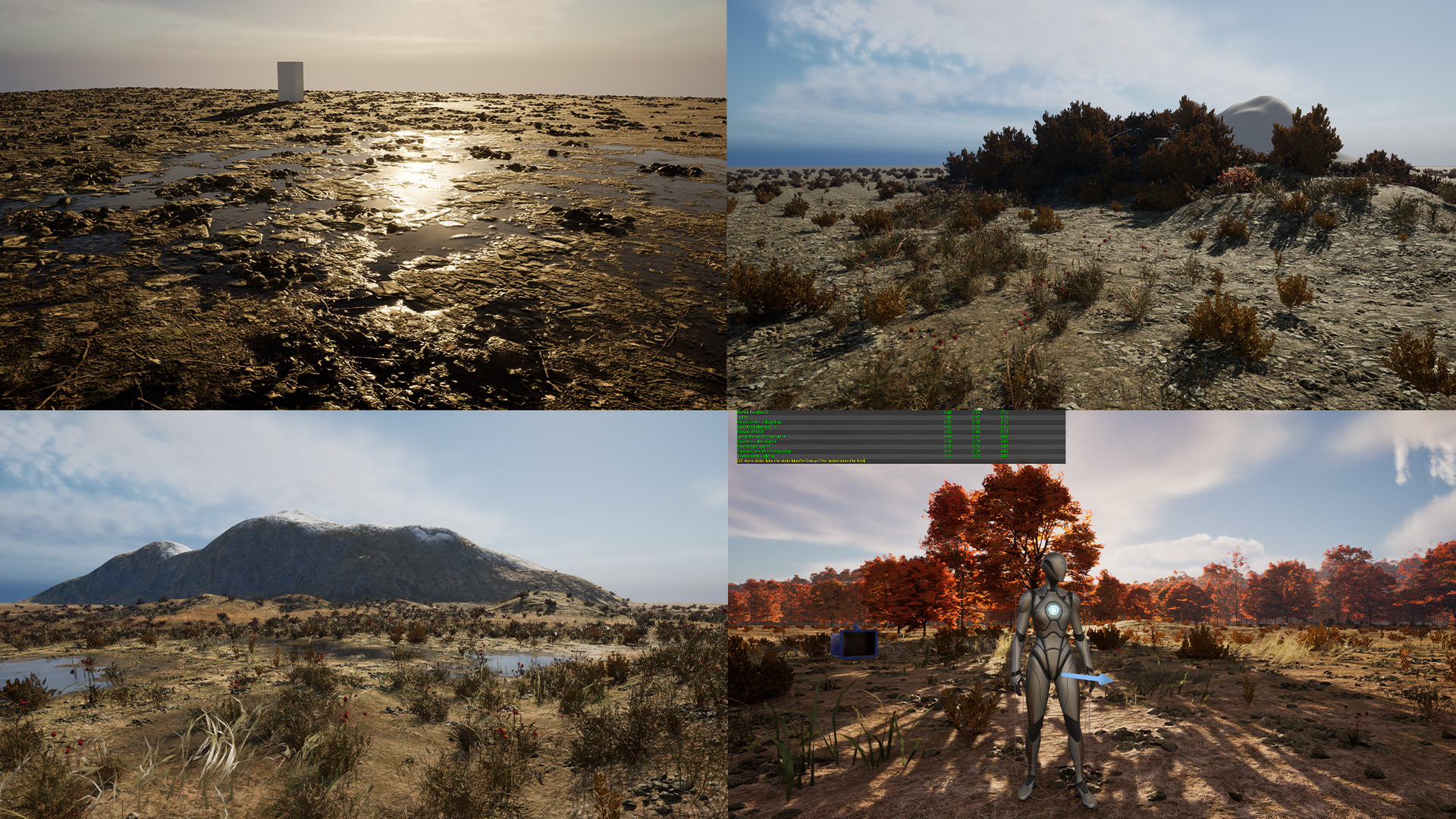
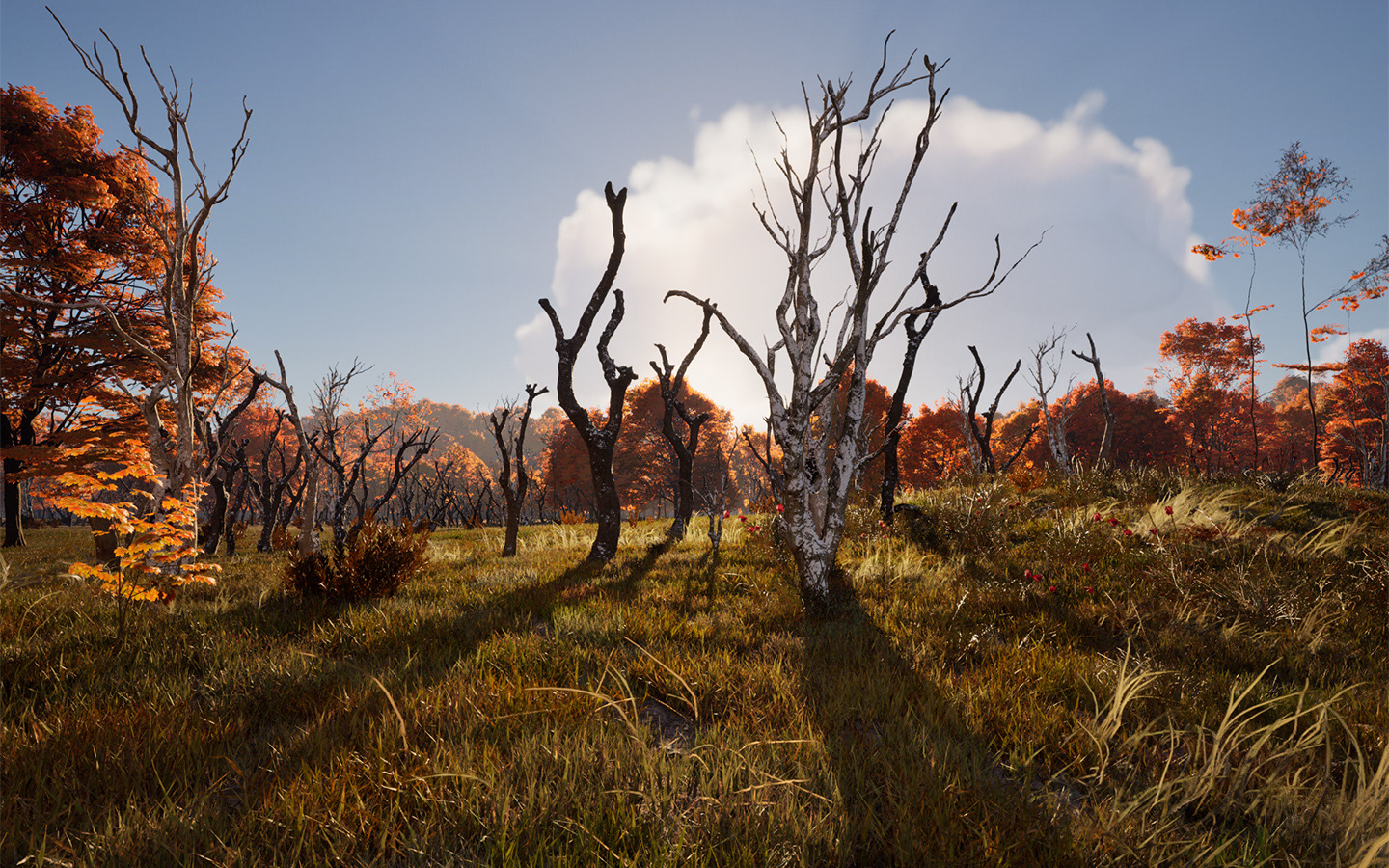
I started setting up the landscape and foliage for the main environment of the Trailer. Even though this wasn't going to be a real-time, game environment, opimization was one of the big things in my mind from the very start.
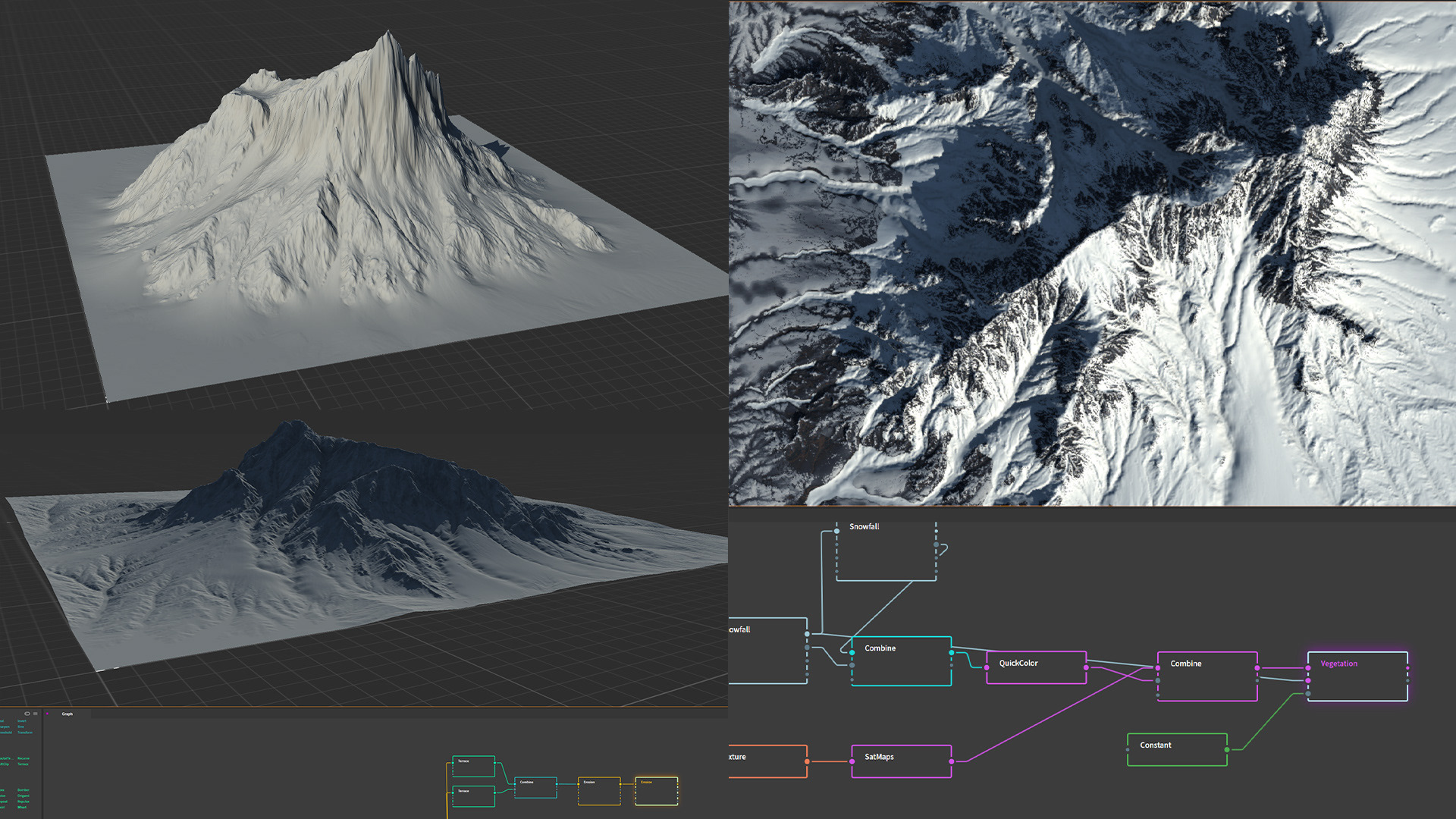
GAEA is a great tool for creating custom, procedural land masses. It has a free version with some limitations so you can even learn to use it without any licenses.
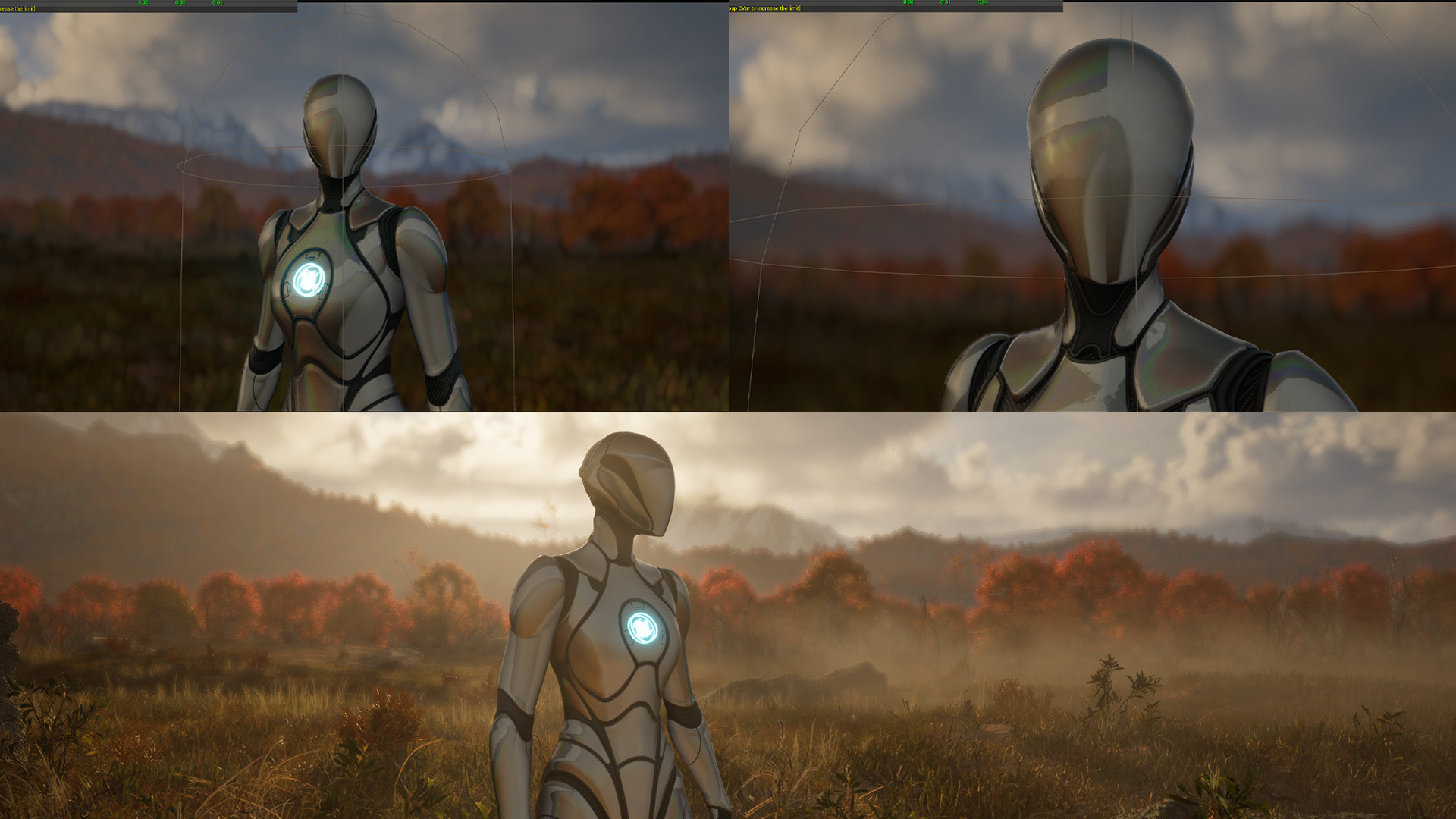
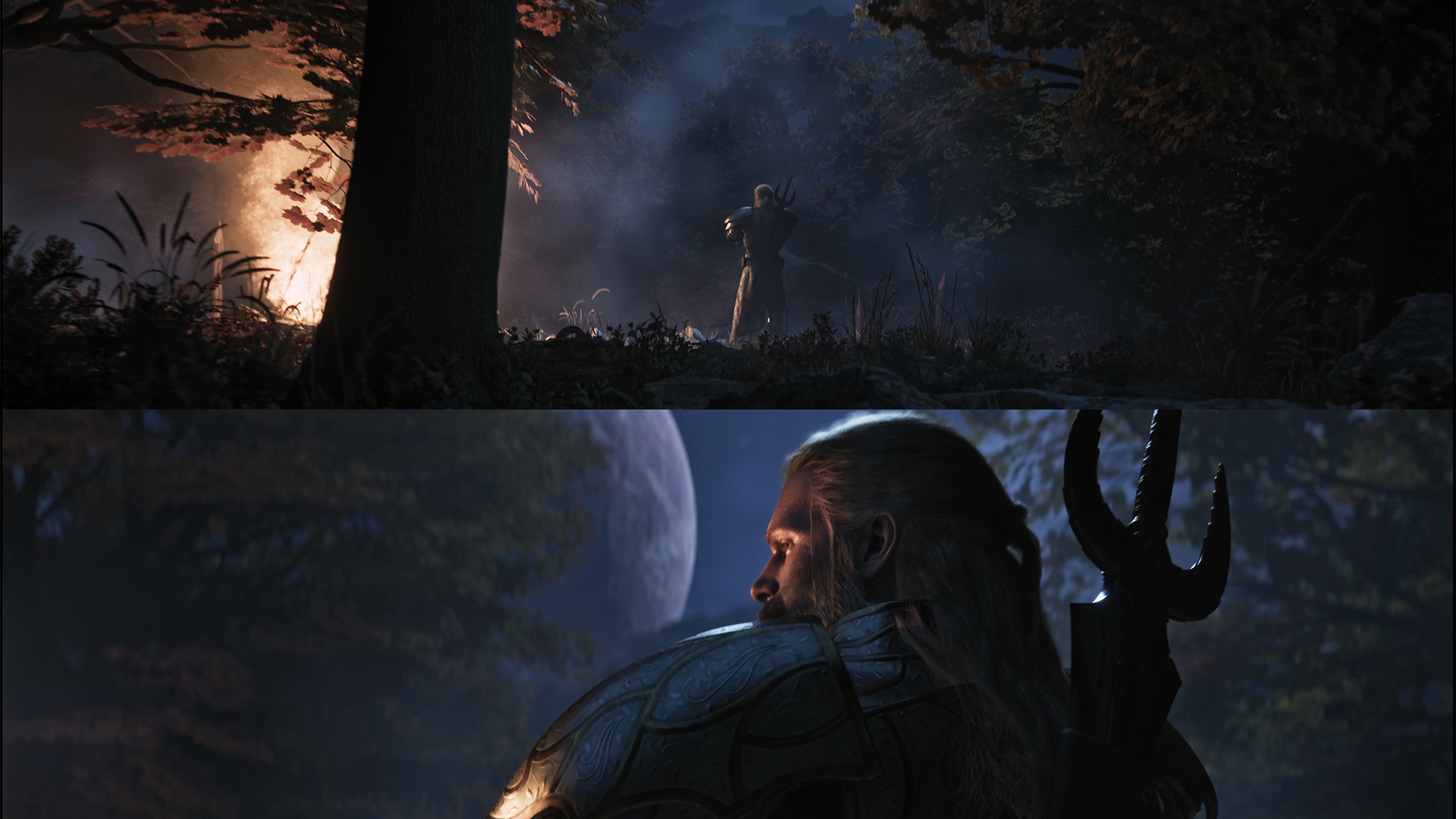
Lighting, atmosphere was another major factor that I wanted to start addressing early on.
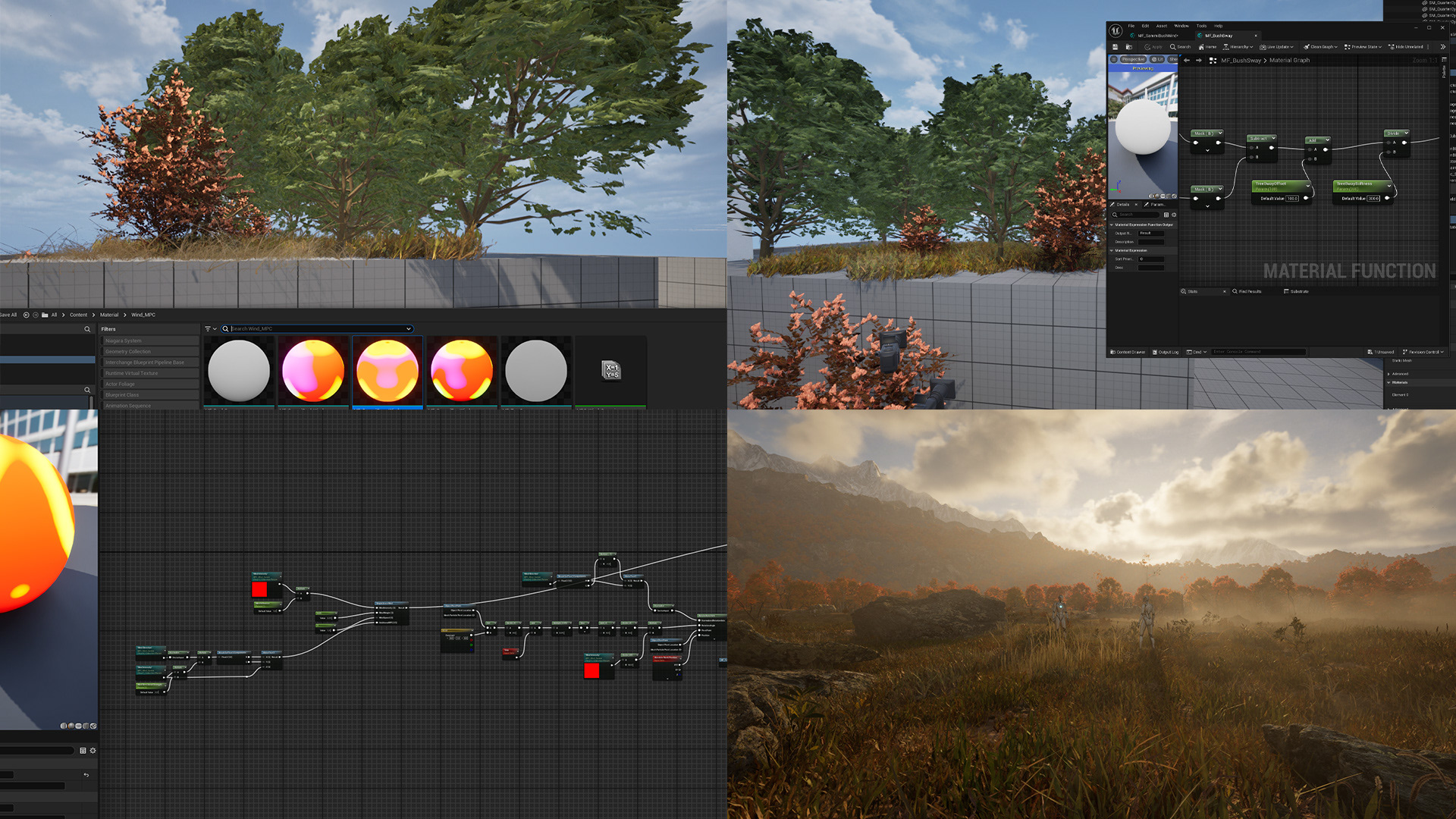
Making custom wind material function for the trrees. Because of the concept of the video, some trees were going to have wind while others don't.
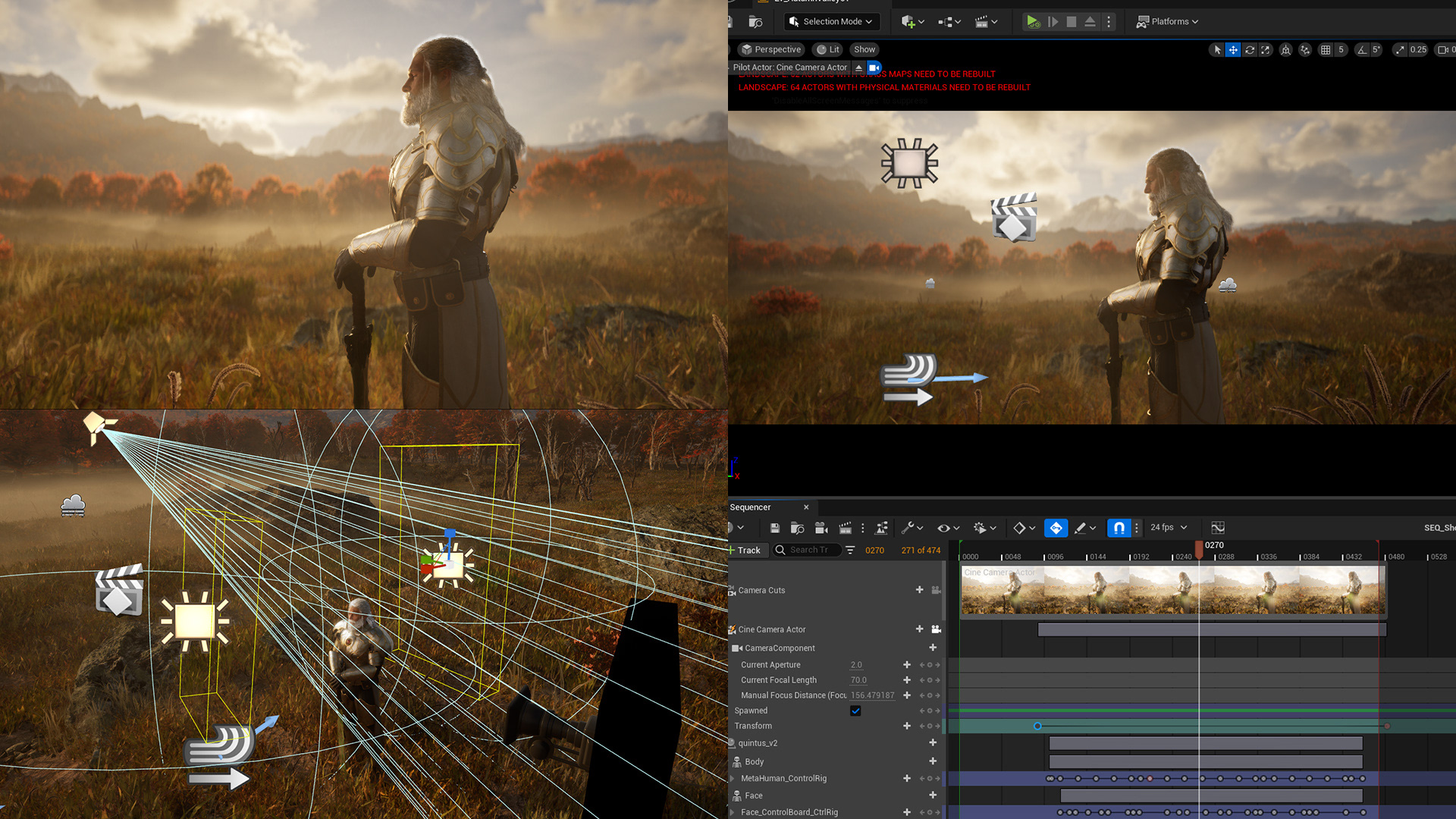
Character model brought into the project for lighting and testing.
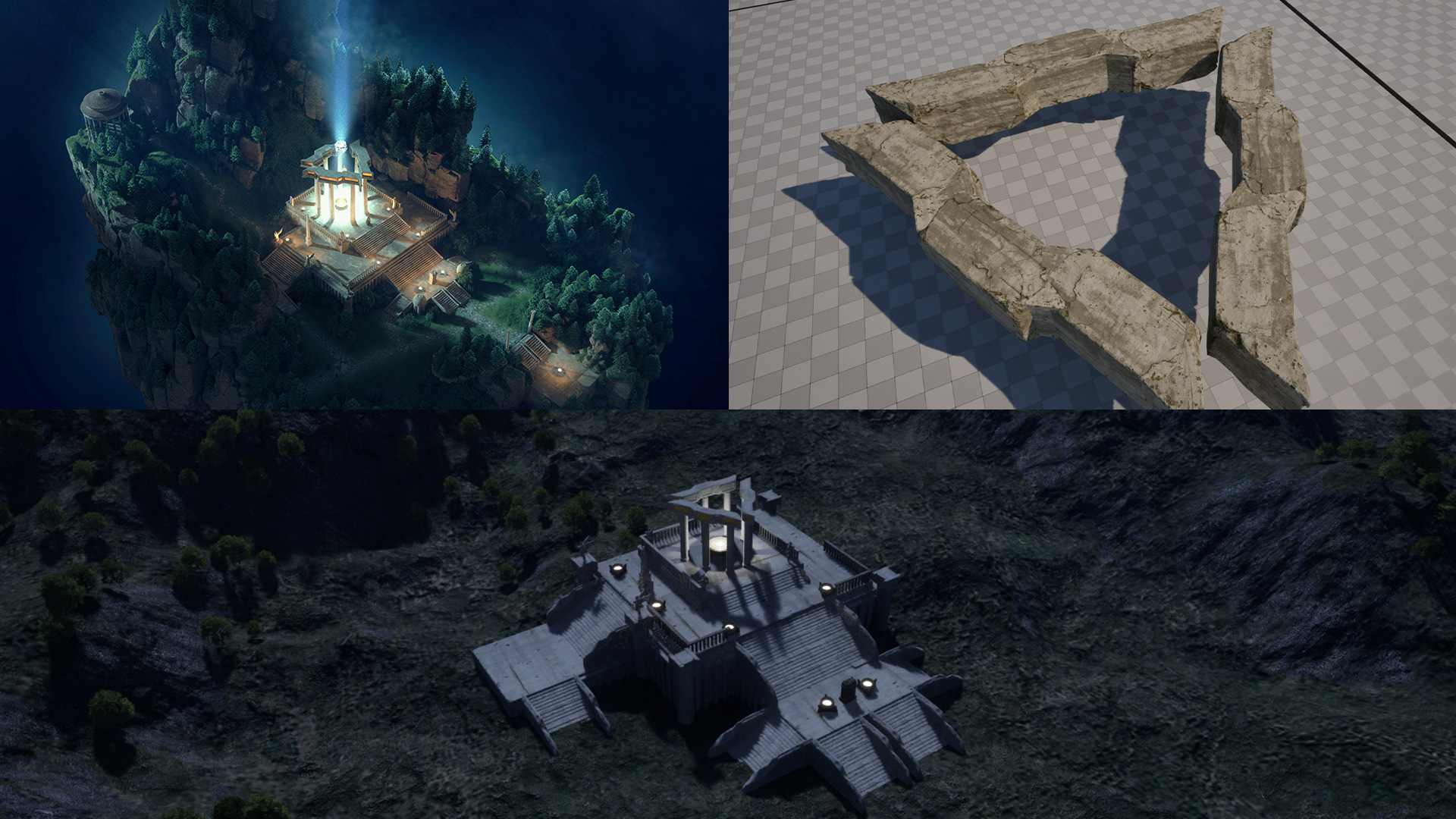
All buildings in the trailer were put together with a variety of modular assets.
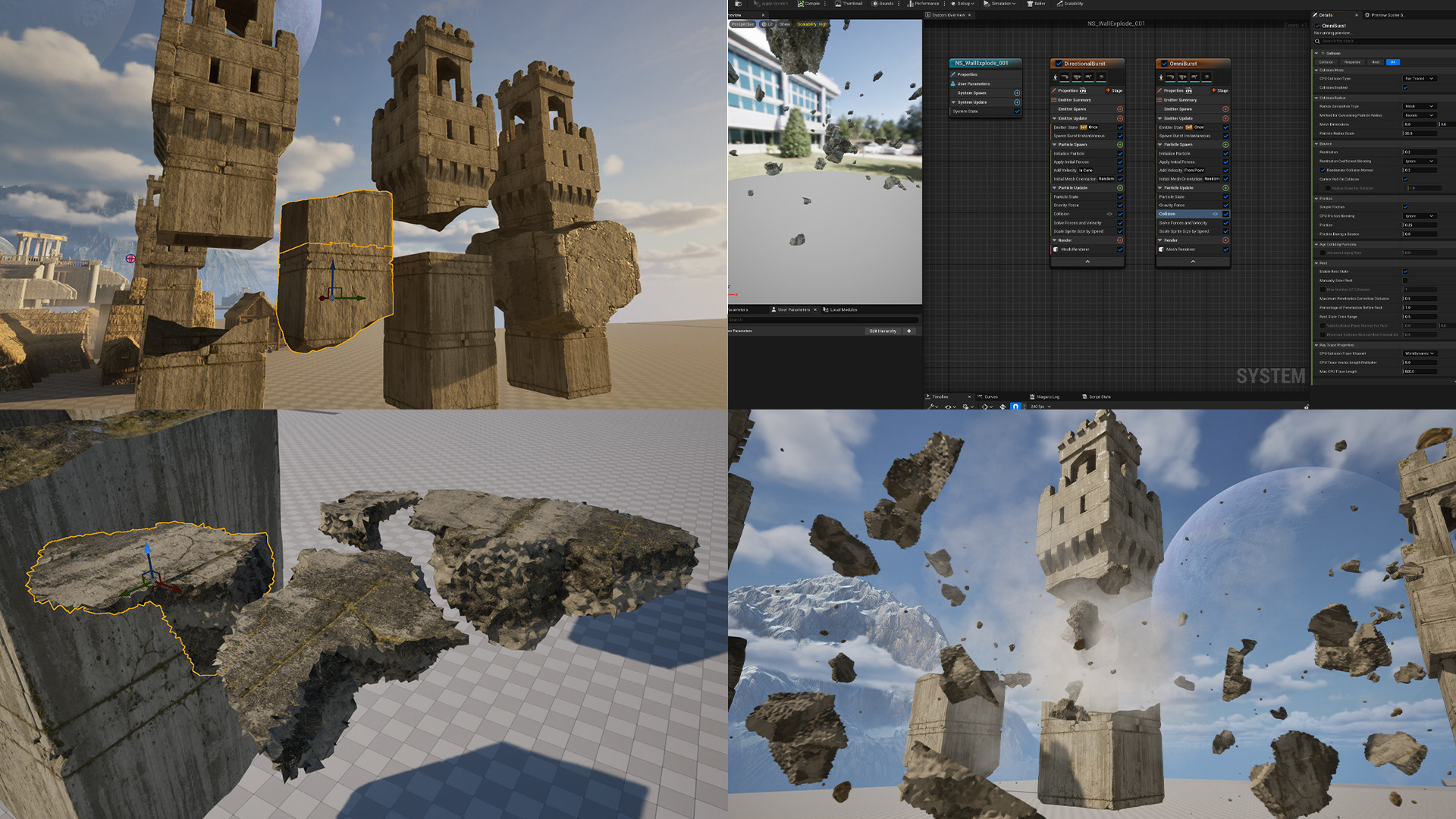
Using Niagara and Chaos in Unreal engine for the destruction effect.
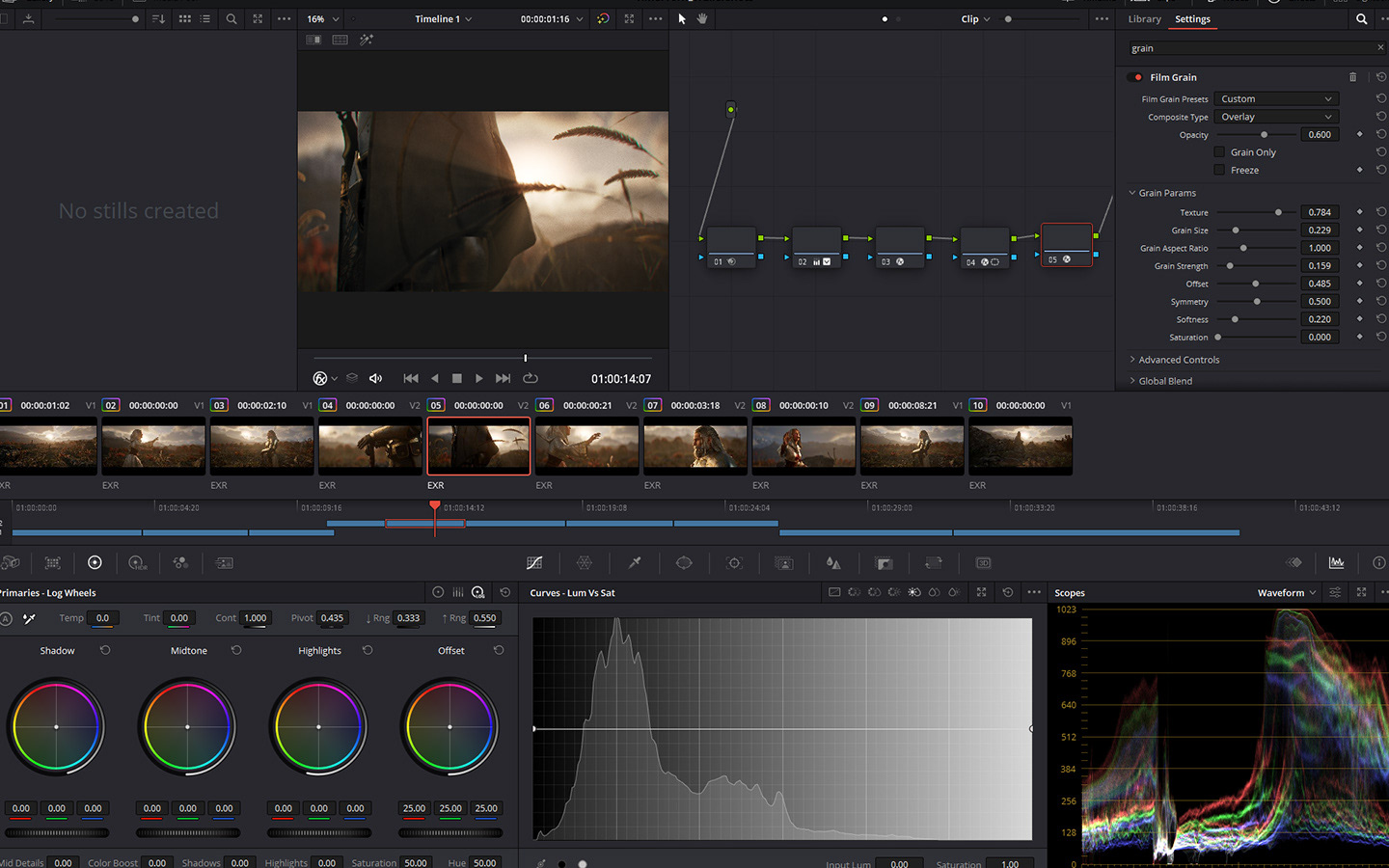
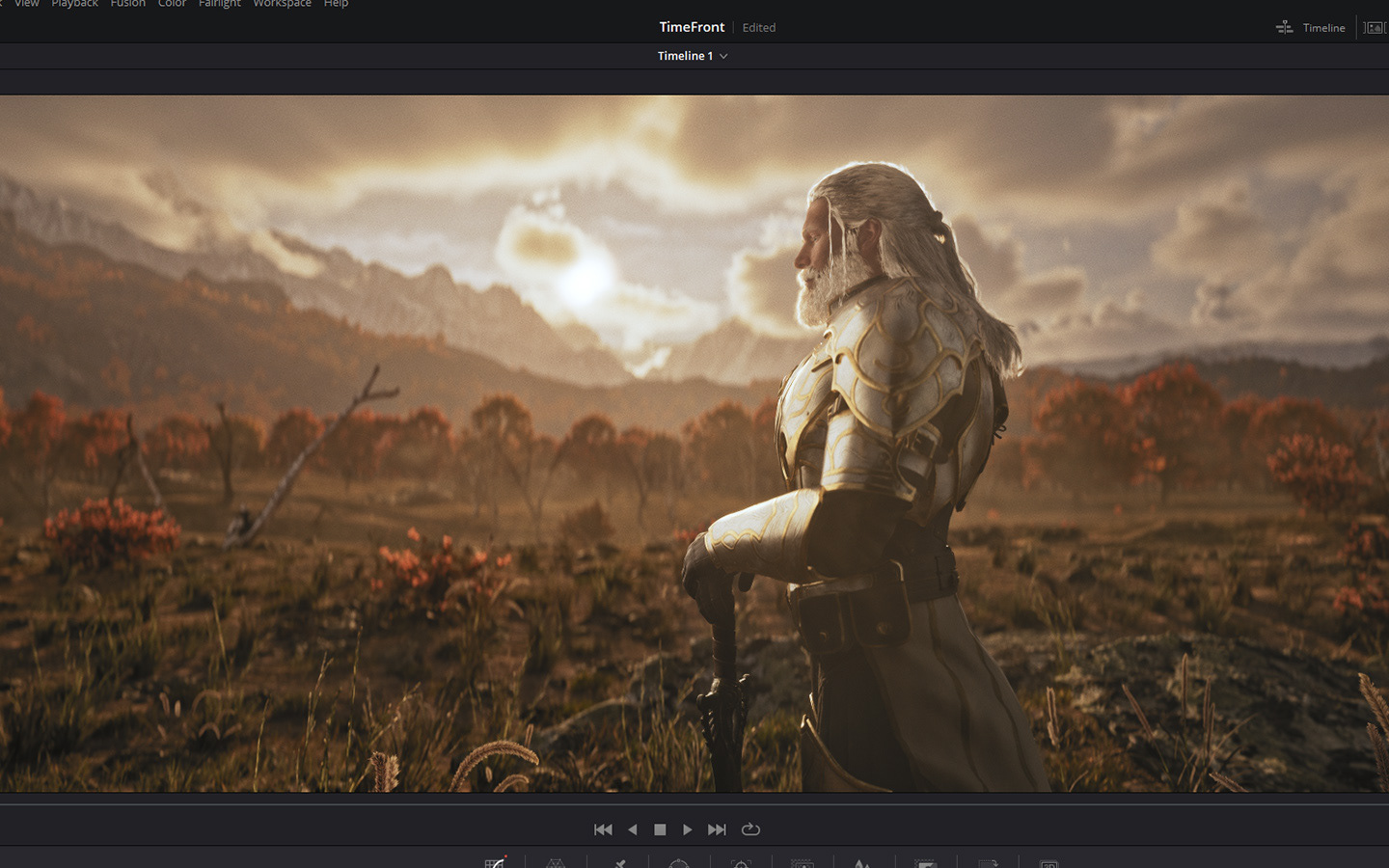
Davinci resolve has a robust, professional colour grading system.
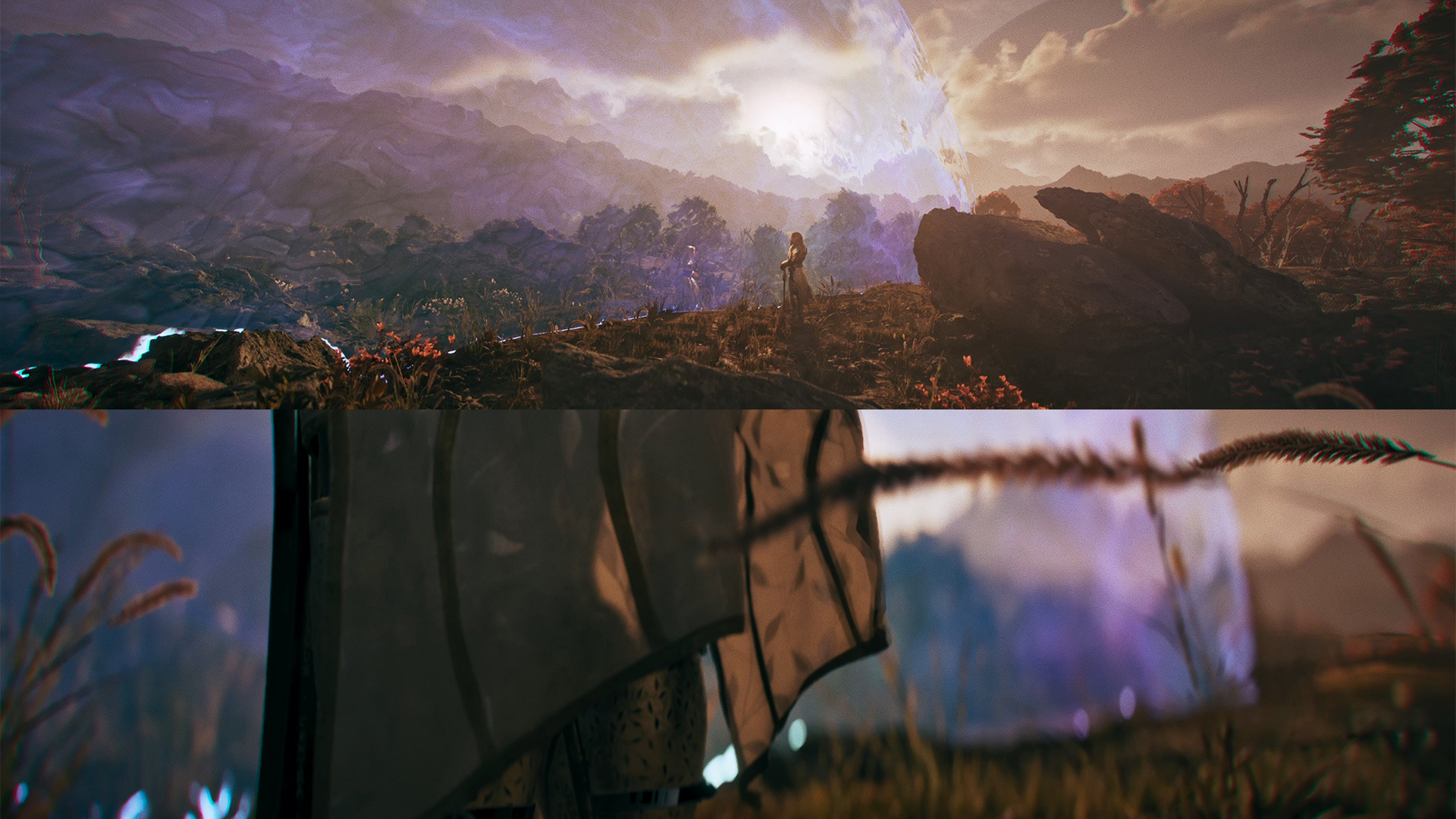
The "Timewall" has gone through many iterations in its material setting to achieve the current look. Transparency and depth of field is still one of those difficult things to dial in correctly in a real-time environment.
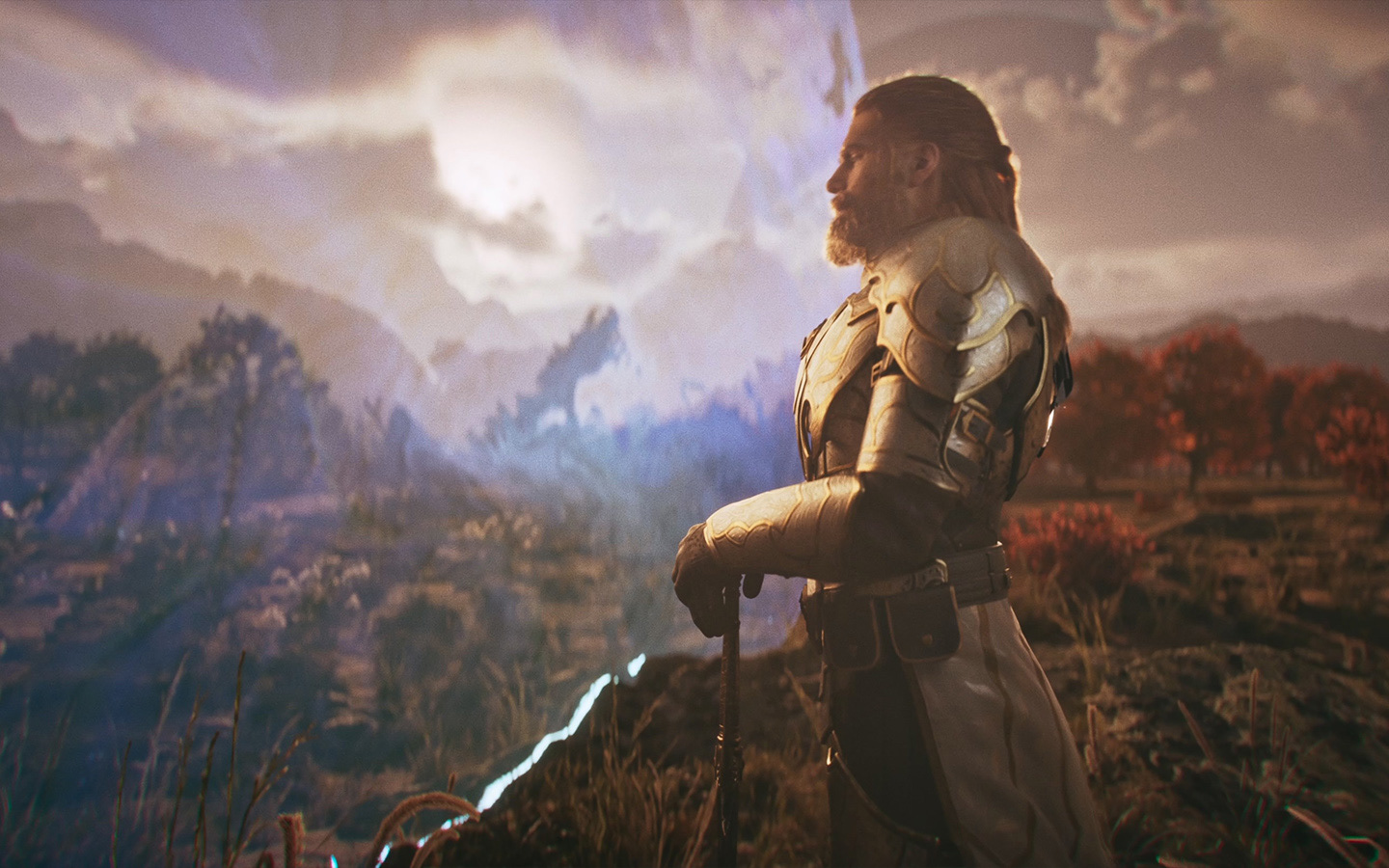
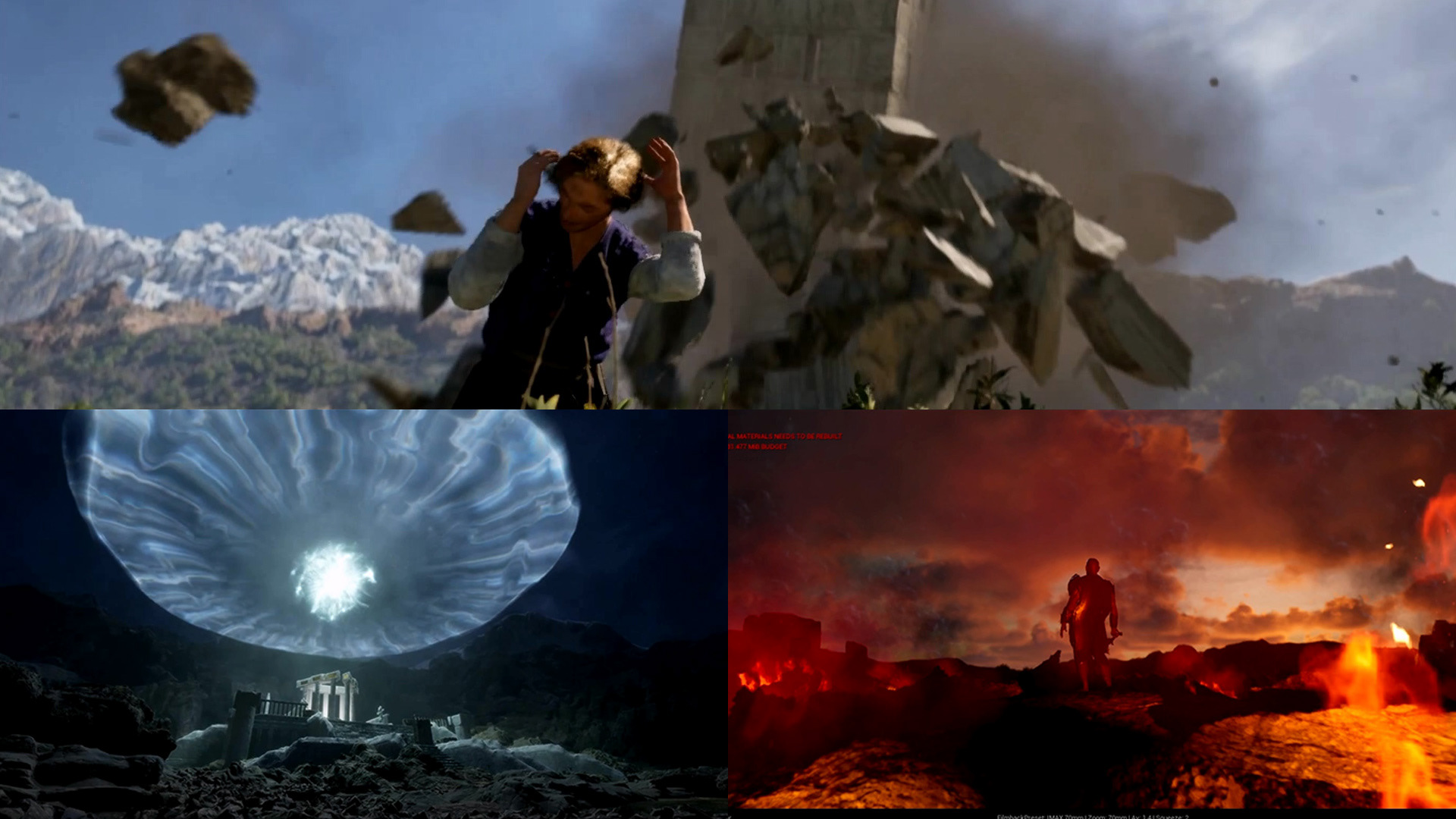
Various particle, destruction, material effects were created with Niagara, Chaos, sometimes a combination of both.
You may also like

Back to Top